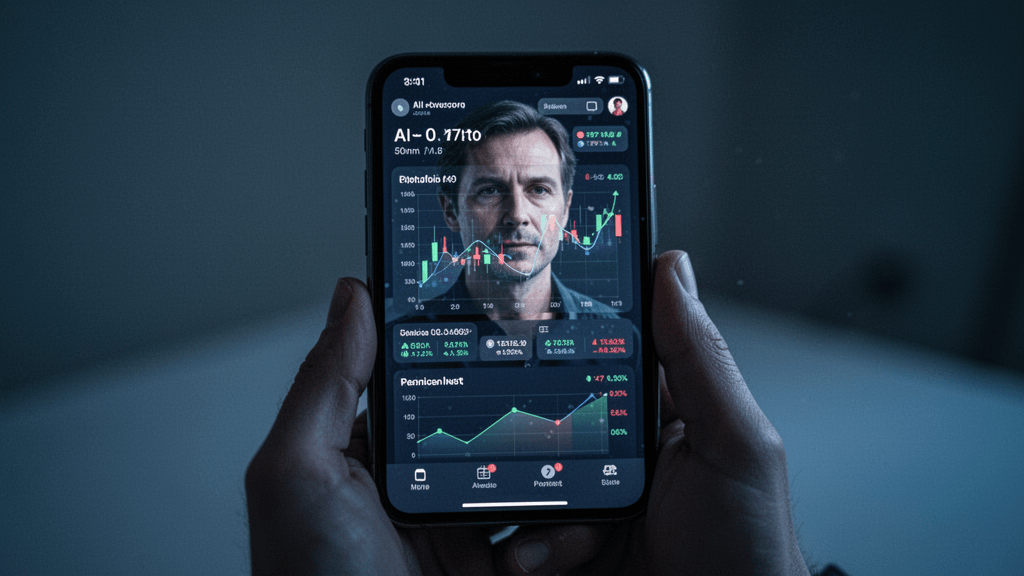
What's the Revolutionary Difference Between AI-Powered Smart Copy-Trading and the Old Mass Copy Models?

The Misconception of “Smart Copying” – When Most Platforms Still Run on Raw Signal Skeletons
Most retail investors enter the world of copy-trading with the expectation that simply selecting a skilled trader, enabling an automatic copy system, and profits will grow on their own. This belief stems from how traditional platforms market themselves: leaderboards, monthly return rates, steadily climbing equity curves. Yet few people ask: what is truly happening beneath the “Copy” button?
Mass-market copy-trading operates on raw signals. When a trader manually opens a 0.5 lot EUR/USD position, the server instantly sends a command to the follower’s account: open an identical position, scaled by a predefined capital ratio. Everything happens within milliseconds. On the surface, this appears perfectly synchronized. But at the data level, the system merely mimics actions—it understands neither the trader’s intent nor the market context behind the signal.
The result is a chain of obscured risks:
- Slippage when copying orders at the second of high-impact news, leading to entry prices far from the original trader’s.
- Mismatched trading conditions: the original trader might use a broker with low spreads and fast execution, while followers operate under different brokerage terms, turning advantage into disadvantage.
- Rigid capital management: the system blindly scales by ratio, with no risk rebalancing as the overall portfolio shifts.
Key Takeaway: Old-school copy-trading is simply a transaction proxy—a replica of actions, not strategy.
The AI Architecture – Why It’s No Longer About Copying Behavior
To understand the distinction, we must peel away the “AI” buzzword used by many platforms as marketing gloss and examine the actual architecture of a true AI-driven copy-trading system. This isn’t just attaching a predictive model before the Copy button. It’s a complete redefinition of the entire data pipeline.
1. From Action Signals to Intent Representation
Modern AI models do not take as input “open Buy 0.5 lot.” Instead, they capture and process a high-dimensional state space just before the original trader acts:
- Market data: price movements across timeframes, trading volume, order book depth (level-2 data), retail long/short ratios.
- Trader behavior data: entry speed, average holding time, drawdown tolerance, session-based trading frequency.
- Macro and news data: sentiment scores from news sources, economic calendar events, fear-greed indices.
The output of this initial processing layer is a latent representation of the situation. The AI doesn’t learn to mimic orders—it learns to map market states and the original trader’s style into a probability distribution of optimal actions for the follower’s account.
2. Multi-Agent Decision Layer – Not Just Copying, But Refusing to Copy
One of the key differentiators of AI over traditional copy models is the ability not to act identically. When a raw signal arrives, the model evaluates not only the reliability of the trader but also:
- Risk correlation with existing positions in the follower’s portfolio.
- The follower’s maximum drawdown threshold.
- Whether the market is in an abnormal volatility regime, where swap fees or spreads may widen drastically.
If risk exceeds acceptable limits, the AI may choose to skip the trade, reduce position size, or even execute a hedging trade instead of adding to the same direction. This behavior cannot be hardcoded with if-else logic. It requires continuous policy updates via reinforcement learning trained on actual performance feedback.
3. Automatic Adaptation to Market Regimes
In traditional models, traders are manually selected and often only perform well in specific market conditions (e.g., scalpers thrive in ranging markets but lose during strong trends). AI continuously performs market regime detection via clustering and dynamically adjusts capital allocation weights to each trader, even pausing signal replication if a trading style no longer fits current conditions. This process requires no human intervention during market phase shifts.
Key Takeaway: AI copy-trading does not copy trades. It recreates the decision logic within a new context, independent of the original action.
Simulated Case Study: The Transformation of AlphaTrade Capital
To see the difference in action, let’s examine a fictional firm called AlphaTrade Capital—a small asset manager running a copy-trading service for about 1,200 retail clients in 2024.
Initial Problems
AlphaTrade used a third-party traditional copy-trading platform. They onboarded 5 in-house professional traders with distinct strategies: gold scalping, index swing trading, and currency carry trades. The system copied trades using fixed capital ratios.
After six months, the data showed:
- Average client returns lagged significantly behind the original traders’ performance.
- Client account maximum drawdowns were 1.8 times higher than the original traders’ due to compounded trade entries during volatile periods.
- 40% of clients churned after a major news shock due to lack of adaptive risk control.
How AI Changed the Game

In early 2025, AlphaTrade transitioned to an internal AI-powered copy-trading solution. Their architecture included:
1. Data ingestion layer connected via exchange APIs to access real-time order books, time & sales, and trader position data.
2. Deep learning model (Gated Transformer) trained on 3 years of historical data, predicting not just the next trade direction, but also its success probability under each client’s current portfolio context.
3. Adaptive risk manager executing dynamic capital allocation, capping maximum exposure per trader based on correlation and forecast volatility indicators.
Concrete example: When the original trader shorted gold ahead of Non-Farm Payrolls, the AI system detected a 300% spread spike and thin liquidity. Instead of copying immediately, the AI delayed entry by 15 seconds to wait for spread recovery, entered at a better price, and reduced position size by 30% due to elevated volatility forecasts.
Results After 12 Months
- The performance gap between original traders and clients narrowed significantly, with remaining differences primarily due to varying transaction costs.
- Client drawdowns dropped sharply—especially during high-impact news events—thanks to intelligent order delay and size reduction.
- Client retention improved markedly, even through strong market corrections.
Key Insight: The difference wasn’t about picking better traders, but about having an intelligent middleware layer capable of transforming raw signals into context-appropriate actions for each target account.
Visual Comparison – When the Surface Looks the Same, But the Depths Are Worlds Apart
Externally, both models let users “click and copy.” But their technical architectures lead to divergent operational outcomes and performance. The table below highlights the core differences.
Table 1: Traditional vs. AI Copy-Trading Model Comparison
| Criterion | Traditional Copy-Trading | AI Copy-Trading |
|---|---|---|
| Input Signal Type | Simple order signals (open/close) | Multi-dimensional state representation: price, behavior, news, liquidity |
| Order Execution Mechanism | Instant copy with fixed capital ratio | Risk-threshold evaluation; can delay or reject trade |
| Signal Rejection Capability | None (or basic hard-coded rules) | Yes, based on success probability and portfolio concentration |
| Market Adaptation | Manual pausing after prolonged underperformance | Automatically adjusts trader weights based on volatility regime |
| Capital Management | Static volume scaling | Dynamic position sizing via VaR, portfolio correlation |
| Liquidity Volatility Handling | Exposed to price slippage and high spread | Detects low-liquidity regimes, modifies order execution behavior |
| User Requirements | Mainly select traders via leaderboard | Configure risk appetite; system auto-selects optimal trader set |
This comparison shows that AI copy-trading replaces a simplistic decision layer with a probabilistic reasoning engine capable of critically assessing original signals. This is not a feature upgrade—it’s a system-level transformation.
Evaluating AI Copy-Trading Solutions Using Real-World Metrics
Not all “AI-labeled” solutions meet the rigorous demands of live trading. To assess a mature AI copy-trading system, I propose a scoring framework with a 1–10 scale, applied to a representative platform deployed in 2026.
Table 2: Scorecard for Evaluating Next-Gen AI Copy-Trading Platforms
| Criterion | Score | Notes |
|---|---|---|
| Signal Fidelity | 8 | High accuracy in reconstructing intent, but still improving under novel market structures |
| Market Regime Adaptability | 9 | Clustering works well across 4 main regimes: trend, range, breakout, crisis |
| Risk Protection & Drawdown Control | 8 | Clear dynamic caps in place, but slight lag during extreme volatility beyond historical data |
| Transparency in Decisions | 7 | Provides logs explaining trade rejections or size reductions, though not fully intuitive for non-experts |
| Operating Cost | 6 | Requires strong compute resources and costly premium data, increasing expenses vs. standard copy |
| Risk-Profile Personalization | 9 | Detailed risk configuration; AI closely matches trader selection and allocation to user preferences |
Overall score on a 10-point scale: With an average of 7.8, current AI solutions far surpass traditional models (which would score around 3–4 on the same scale, especially on adaptability and risk control). However, cost and transparency remain areas for ongoing optimization. Scores of 1–4 are low, 5–8 are fair, and 9–10 are excellent. The current solution sits in the high-fair range, reflecting strong potential but not absolute maturity.
Trends 2025–2026: When AI Agents Negotiate Risk Instead of Just Copying
The landscape in 2025 shows we’re in a transitional phase. AI in copy-trading isn’t stopping at better imitation. Research labs are advancing toward autonomous agents capable of interacting with each other. Instead of one central system pushing signals from traders, we may soon see AI agents representing individual users negotiating to jointly join strategies, distributing risk via smart contracts on blockchains, or automatically creating cross-account hedging positions.
Another frontier is integrating on-chain signals, institutional fund flows, and unstructured macroeconomic data to give models a more complete market picture—entirely different from mass-copy models that only look at price charts and trader order history.
However, a cautionary note: in competitive environments, AIs learn from market data. If many systems deploy similar strategies, they may create feedback loops, leading to more synchronized market behavior and increased systemic risk. This is a critical design consideration product developers must address when implementing collective behavior limits.
Conclusion
The core difference between AI-powered copy-trading and earlier mass-copy models isn’t about copy speed or the number of traders supported. It’s about shifting from copying trades to recreating decision-making capabilities in a personalized financial context. The system is no longer a passive signal pipe—it becomes an intelligent middleware layer that actively analyzes, filters, and transforms raw signals to suit each individual user.
For retail investors, the key isn’t chasing platforms that casually brand themselves as “AI.” The real metric is the system’s ability to minimize the gap between target profit and actual performance across all market conditions—especially during the worst ones. The ability to analyze underlying mechanics deeply will be the survival skill needed to avoid the pitfalls of the digital copying era.
Related Posts

Breaking Down the Footprints of Big Money: Analyzing Volume and Price Structure Dynamics in 2026
Building an Automated Trading System: A Symphony of Logic and Discipline to Eliminate Emotion
Differences in Mindset from Manual to Automated Multi-timeframe Trading
Three Types of Market Noise That Perfect Backtesting Strategies Cannot Anticipate

What Happens When Copy Trading No Longer Follows a Person, But Instead Follows a Continuously Learning Algorithm?