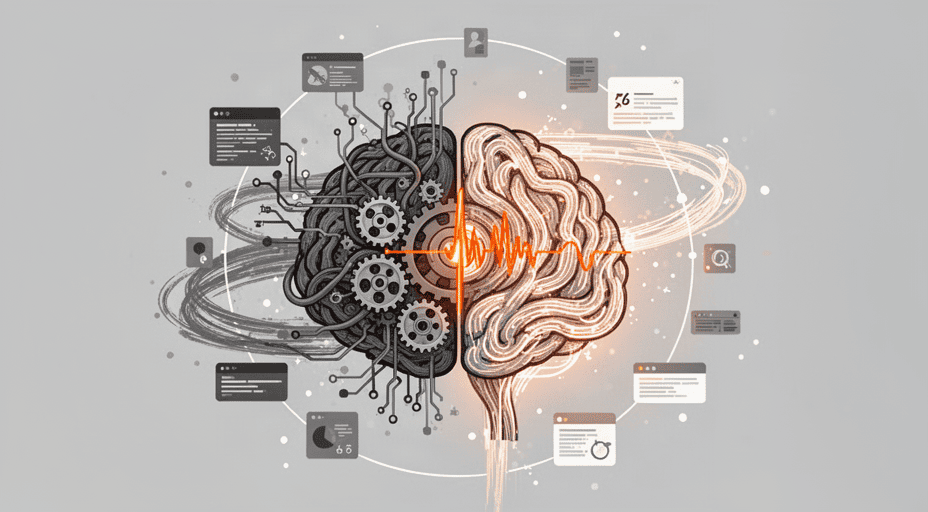
When Content Creators Are Burning Out From Overstuffed Posting Schedules, What Opportunity Exists for Smart Content Distribution Automation Tools?

We’re witnessing a paradox in the content creation industry. The most professional and sharpest content creators are burning out the fastest - not because they’ve run out of ideas, but because the distribution system is crushing the production system.
Posting schedules are no longer about “a few videos per week.” They’ve evolved into complex, multi-platform matrices: long-form YouTube, YouTube Shorts, TikTok, Instagram Reels, Threads, LinkedIn, X/Twitter, email newsletters, blogs, Discord communities, podcasts. Each platform demands a different format, tone, and optimal posting time.
Most current discussions focus on AI-powered content creation. But that’s only half of the problem. The other, subtler, and often overlooked half lies in the task creators hate most: content distribution and format adaptation. This isn’t just about individual excellence anymore. It’s about transforming one creative brain into a publishing factory - without killing that brain in the process.
We’ll unpack the mechanics of this burnout, identify the real sources of energy leakage, and propose a new model where distribution automation tools don’t act as mere utilities but as a second operating system.
The Core of Burnout: Not Too Much Work, But Too Much “Translation”
Let’s examine the raw data from a typical creator in 2025–2026. A typical workday doesn’t start with scriptwriting. It begins with opening seven different browser tabs - each representing a separate platform with its own dashboard, algorithm rules, and comment section.
The energy drain is not in initial content creation. A 20-minute YouTube video idea might take four hours of intense focus. However, reconfiguring that same idea into a 10-tweet thread on X/Twitter, a LinkedIn carousel, three 60-second Shorts/Reels, an SEO-optimized blog post, and a curiosity-driven email newsletter takes another 6–8 hours.
This is a form of cognitive labor that’s consistently undervalued: the work of re-encoding a single idea across different contexts. No new creative thinking occurs here. Only constant restructuring and adaptation. And it’s precisely this part of the work that’s most amenable to automation, because it operates based on clearly structured rules.
The key isn’t AI writing for you. The key is a system that can read the “core semantics” of your original content and automatically generate variations tailored to each platform’s unique “content protocol.”
Three Layers That Need to Be Automated in a Distribution System
Forget the idea of a simple “auto-posting tool.” What a professional creator needs in 2026 is a holistic architecture made up of three synchronized operational layers. Each layer addresses a different type of fatigue.
Layer 1: Context Translation - From Video to Text to Visuals
This is the biggest bottleneck. A 20-minute spoken video contains roughly 3,000–3,500 words, delivered with tone, pace, and emphasis. Hire someone to transcribe it, and you get a raw transcript. But a transcript isn’t content. It’s spoken words converted into text.
Transforming that transcript into a blog post, a social thread, or a LinkedIn caption requires removing filler words, reconstructing dependent clauses into standalone statements, adding subheadings, and shifting tone from spoken dialogue to written monologue. This is a rule-based process - no magic, no wild creativity. A large language model (LLM), properly trained and prompted to detect communicative intent, can perform this conversion with high accuracy.
Layer 2: Platform-Native Adaptation - One Idea, Multiple Rulebooks
Each social platform functions like its own country, with unwritten content rules. LinkedIn dislikes external links in posts. X/Twitter rewards well-packaged hot takes and debate. TikTok values viewer retention in the first 1.5 seconds. YouTube Shorts thrives on rewatch loops. Instagram Reels live off visual aesthetics and music.
Burned-out creators aren’t struggling because they don’t understand these rules. They’re overworked because they have to keep switching between multiple rulebooks in a single afternoon. The ideal distribution automation system doesn’t just publish - you’ve already seen that. It embeds a dedicated rule engine for each platform, automatically applying constraints on text length, aspect ratios, call-to-action placement, and even sentence structure tailored to each platform’s algorithmic temperament.
Layer 3: Timing Orchestration - No More Manual “Publish Now” Buttons
A significant portion of mental energy isn’t spent during creation or posting - it’s burned in the decision of “should I post now?” The ritual of checking posting times, cross-referencing audience time zones, tracking holidays and trending hashtags - these micro-tasks drain cognitive capacity.
Posting schedules shouldn’t be something a human must remember. They should be data inputs for an intelligent scheduler. Publishing decisions should be driven by historical engagement data from the account itself - not by generic “best time to post” infographics circulating online.
Simulated Case Study: The System at SoundFuture Media
To see how this model works in practice, consider SoundFuture Media, an international content studio focused on audio technology and musical instruments. They run a weekly 45-minute podcast called “Signal Chain,” hosted by a single product expert.
Their challenge: each episode takes six hours to produce but only lives on YouTube and Spotify. Attempts to expand onto Instagram, LinkedIn, and email newsletters failed within months due to founder overload.
Here’s the automation architecture they implemented:
1. The completed podcast is processed automatically into three layers of raw content: cleaned transcript, time-stamped peak moments, and a list of technical concepts discussed.
2. The transcript is segmented into 200-word chunks based on natural idea breaks - no mid-sentence cuts.
3. Each segment is labeled with an “opinion strength score” (1–10) based on semantic analysis. Segments scoring 8+ are automatically formatted as expert-style LinkedIn posts. Technically dense segments go into the X/Twitter thread pipeline.
4. The full video podcast is automatically split into 12–15 highlights using audio volume and speech speed analysis. Moments with high emotional intensity (detected by sudden speech speed increases of >20% over baseline) are prioritized for Reels.
5. The scheduler layer orchestrates all publishing, using an “interest trigger” rule: if a Reel achieves >70% retention in the first 24 hours on Instagram, the system automatically rolls out variations of that idea to YouTube Shorts and TikTok 48 hours later, while sending an email snippet to the newsletter.
Operational results: SoundFuture scaled from two to five active platforms without hiring more staff. The founder reduced time spent on distribution from 15 hours weekly to just 2 hours - used solely for reviewing and approving automated outputs before the scheduler runs.
This is not “AI doing content.” This is AI as an assistant producer and traffic controller. It allows the expert to remain in the driver’s seat for approval and strategy, removing the burden of manual repackaging.
Available Technology Components That Can Be Connected Today
As of 2026, all individual components to build such a system are already available and ready for integration. No futuristic tech required - only the right architecture.
Transcript Engine: Stitching ASR Model APIs
OpenAI’s Whisper and its fine-tuned variants now achieve high accuracy on standard English and are rapidly improving on other languages. For Vietnamese, systems like VinASR or Google Cloud Speech-to-Text can deliver transcripts with acceptable speaker diarization (speaker identification) for well-recorded podcasts.
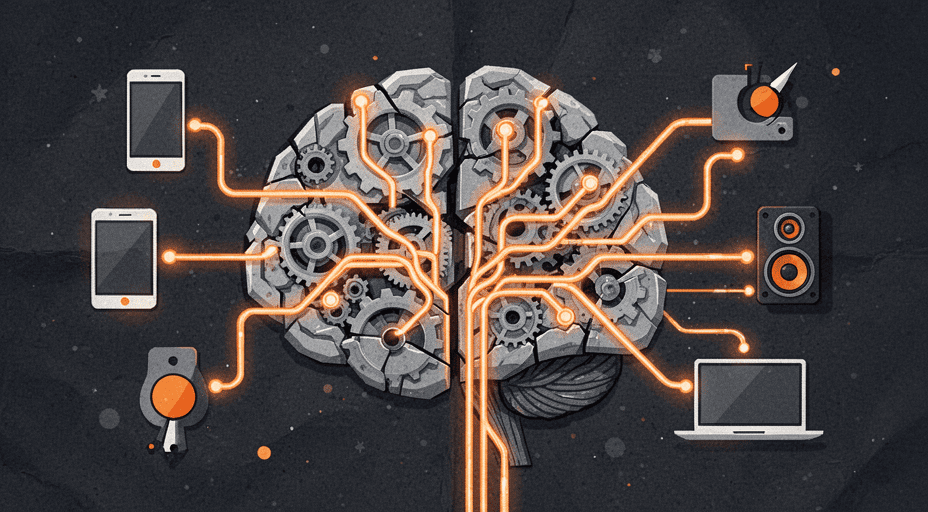
Transcripts aren’t the end goal. They’re inputs for the next step: text segmentation and intent labeling.
Content Repurposing Engine: LLMs With Role-Based Prompting
This is the core of the entire system. Prompts should not be vague commands like “turn this video into a blog.” They must be rigid, rule-based workflows:
- First, identify “atomic idea units”: each paragraph under 150 words containing exactly one idea.
- Second, classify each unit by content type: “strong opinion,” “data citation,” “personal story,” “step-by-step guide,” “debunking a common myth.”
- Third, map each type to a set of output formats: “strong opinion” becomes a short LinkedIn caption; “step-by-step guide” becomes an X/Twitter thread; “debunking myth” becomes a Reels idea using the “shock - explain - resolve” arc.
This can be implemented using models like GPT-4o or Claude 3.5 Sonnet, with prompts structured as a workflow engine rather than one-off commands. Libraries like LangChain or AutoGen enable programming agent pipelines, where each agent handles a transformation layer and cross-references others’ output before publishing.
Audio-Visual Clipping Engine: Signal Analysis Over Manual Editing
For video, identifying “golden moments” for shorts shouldn’t rely on gut feeling. Systems can analyze the audio waveform directly to detect:
- Spikes in words per second, signaling emotional intensity.
- Unexpected silences before key statements.
- Sudden volume surges.
Python libraries like Librosa or Aubio can automatically process these signals, generating precise timecodes for cuts - accurate down to the frame. Then, an FFmpeg script module automatically renders clips with platform-specific aspect ratios.
Advanced Scheduler: Decision-Making Based on Historical Data
Buffer, Hootsuite, and Later are basic schedulers. They publish according to fixed calendars. A smarter scheduler reads analytics data (via official APIs) from the accounts it manages and answers questions like: “Based on past 90 days, should technical how-to posts go out at 9:30 a.m. or 2 p.m. on Tuesdays?” This logic can be built by integrating APIs from Meta, Google, LinkedIn, and X/Twitter. Complex machine learning isn’t necessary - a weighted moving average heuristic works well.
Comparison of Content Distribution Solutions
This assessment is based on how well tools address the three core challenges: context shifting, platform-native adaptation, and intelligent orchestration.
| Solution / Tool | Context Translation Capability | Platform-Native Adaptation | Intelligent Orchestration | Actual Automation Level |
|---|---|---|---|---|
| Fully Manual Posting | None (entirely human-driven) | Depends on individual memory | Depends on individual memory | 0% |
| Buffer / Hootsuite | None | Basic format support | Static scheduling | 20% |
| Opus Clip / Munch | Automatic video highlight clipping | Aspect ratio and auto-captions supported | None | 45% |
| Castmagic / Swell AI | Transcribes and creates social posts from podcasts | Neutral tone, limited deep platform optimization | None | 55% |
| Custom Integrated Multi-Engine System | Full (transcript clean-up, intent labeling, rule-based repurposing) | Dedicated rule engine per platform | Scheduler driven by account-specific historical data | 85% |
Castmagic and Swell AI lead available tools in podcast-to-post conversion, showing the market has recognized the pain point. However, their outputs still require human editing to refine tone and achieve sharp platform-specific adaptation. Custom-built systems remain the definitive solution for creators producing high-volume content.
No single tool can do it all. The operating architecture itself is the real product.
Scorecard Evaluating Technology Components for a Smart Distribution System
Evaluation for independent creators or small creative studios planning to build or integrate such a system in 2025–2026. Scale: 1 (not ready for production) to 10 (mature, deployable without large engineering teams).
| Criterion | Score | Notes |
|---|---|---|
| English transcript quality | 9 | Whisper v3 has a very low word error rate on standard speech. Cloud APIs from Deepgram and AssemblyAI offer sub-second latency for real-time use. |
| Vietnamese transcript quality | 6 | Available but struggles with strong regional accents and industry slang. Requires fine-tuning with each creator’s custom dataset. |
| Language model for role-based repurposing | 8 | GPT-4o and Claude 3.5 Sonnet can handle this if prompts are structured as workflows. Current issues are API costs at scale and processing latency. |
| Audio analysis for highlight detection | 7 | Open-source libraries handle waveform and speech speed tasks well. However, subtle emotional cues - irony, dry humor - are still hard to detect from audio alone. |
| Social platform APIs for scheduler | 5 | Meta and X/Twitter frequently change access policies and restrict automation. LinkedIn’s API is limited for personal accounts. This is the most unstable layer, entirely dependent on platform policies. |
| Creator approval interface | 8 | Technically simple. A clean dashboard showing queued outputs with quick edit and approval functions is sufficient. Low-code tools like Retool or Bubble can deliver this easily. |
| Overall production viability score | 7.2 | Feasible now for English-speaking creators with consistent content output. For Vietnamese, expect 3–5 additional months for ASR model fine-tuning and prompt language adaptation testing. |
Scoring guide:
1–4: Don’t invest time or money yet - tech isn’t mature or costs outweigh value.
5–8: Enable controlled trials. System solves most pain points but requires monitoring of technical risks.
9–10: Ready for large-scale deployment, can be packaged as a commercial product.
Who Is Best Positioned to Seize This Opportunity
This opportunity isn’t for tech-first startups trying to build a “one-size-fits-all” platform for everyone. Martech history shows such generic tools usually fail against the messy reality of actual content workflows.
The opportunity lies with three groups:
First: Agencies serving creators. They already have clients and deep insight into current workflows. Their play isn’t selling a new tool - it’s transforming “social media management” into “distribution system operations,” where humans evolve into high-level editors and strategy approvers.
Second: Technically-minded creators open to spending 2–3 months building an internal system. They don’t need general-purpose tools. They need a custom pipeline with prompts fine-tuned to their voice and style. This is a significant competitive advantage no rival can copy - because the system is trained on their own content data.
Third: Independent developers building vertical-specific solutions. Instead of creating tools for everyone, focus on narrow niches: “distribution system for tech podcasts,” “for food creators,” “for fitness coaches.” Each niche has its own repurposing rules, platform preferences, and audience expectations.
Trends 2026–2027: The Rise of “Sovereign Content Workflows”
As social platforms grow increasingly unpredictable in algorithm behavior and API policies, a counter-trend is emerging. Top creators no longer bet their entire presence on a single platform’s stability. They’re building “sovereign content workflows” - owner-controlled content processes.
In this model, original assets (long-form podcasts, research papers, keynotes) are stored on self-hosted infrastructure. Distribution systems aren’t locked into any single platform. If Twitter collapses, the pipeline redirects to Threads or Mastodon. If Instagram changes its algorithm, the platform adaptation engine updates independently - without affecting the core production chain.
The maturation of local LLMs (like Llama 3, Mistral) running on personal hardware is another catalyst. Creators no longer depend on cloud APIs with variable costs and privacy risks. They can run the entire repurposing engine locally, on their own GPU, trained only on their own content data.
Smart content distribution automation tools won’t be remembered as “time-saving software.” They’ll be seen as infrastructure enabling individuals to run media empires without sacrificing mental health or creative quality. The end goal isn’t “post more.” The end goal is “be everywhere without being anywhere.”
Related Posts
AI Dependence Is Changing How Small Businesses Make Business Decisions

AI Marketing for SMEs: Why Small Businesses Prioritize This Area

The AI Revolution Is Lowering Software Development Barriers to Nearly Zero, Unleashing an Unprecedented Wave of Indie Hackers

Founders Are Using AI to Scan Reddit for Real Customer Problems Before Writing a Single Line of Code

AI Solves the Staffing Shortage Puzzle: How Small Businesses Can Scale Without Hiring More