The Disappointment with Monthly Subscription Models Is Creating a New Business Wave Based on Pay-for-Actual-Value
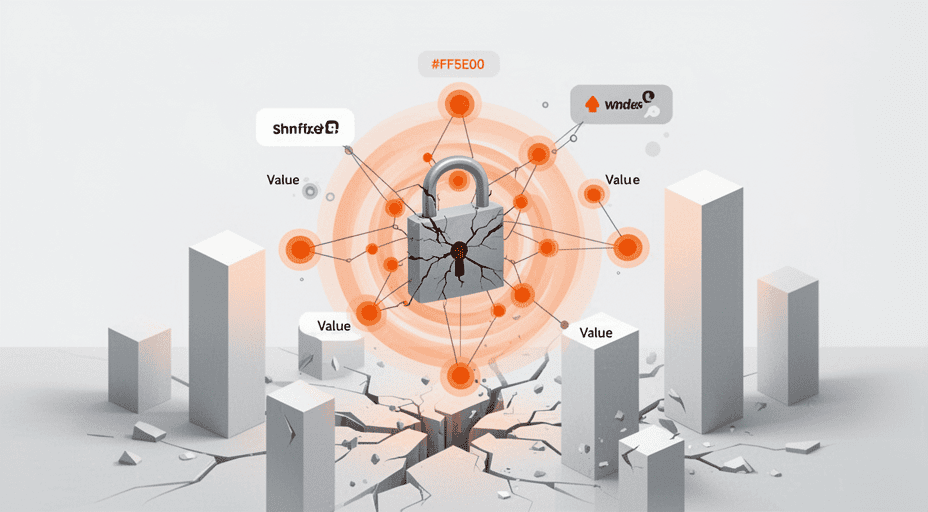
Exhaustion does not come from large expenses. It comes from a scattered mess of 23 small recurring charges, quietly draining accounts without ever requiring the customer to click “Confirm Purchase.” The design software you opened exactly twice last quarter. The yoga app you downloaded during your New Year’s Day fitness rush. The AI email-writing package still automatically renewing even though you’ve forgotten the login password since last month.
The moment you glance at your bank statement and wonder, “What the hell is CloudSyncer Pro?” is the crack spreading across the foundation of the subscription economy.
The trust mechanism has been eroded to its very base. And from that base, an older, more ancient transactional architecture is returning, equipped with the technical infrastructure of 2026.
The Essence of Collective Disillusionment
To understand why recurring-charge models are collapsing, we need to dissect precisely what’s happening in the buyer’s mind. It’s not about price. It’s not about quality. The problem lies in the misalignment between two streams of value.
The subscription model operates on an implicit assumption: a customer’s cash flow and their received value stream remain in sync. The provider collects revenue every 30 days, believing that throughout the cycle, the customer continuously benefits from the product.
The harsh reality: the value stream fluctuates unpredictably and sometimes drops to zero, while the cash flow keeps moving like an automated pump.
This misalignment creates what behavioral economists call silent emotional debt. Each month the service is unused, that $19.99 fee isn’t just a number on a statement. It becomes a small brick placed on the relationship scale. At a certain threshold, the scale collapses.
Three Layers of Silent Anger
Peel back the surface-level excuse of “I forgot to cancel,” and beneath are three intertwined psychological sediment layers.
Layer one: The feeling of lost control. When businesses make cancellation processes more complex than sign-up processes, they’re not optimizing customer retention. They’re stripping away decision-making power. The human brain reacts far more strongly to loss of autonomy than to loss of money. Each confirmation pop-up asking, “Are you sure you want to leave?” triggers the amygdala—the anger-processing center of the reptilian brain.
Layer two: The empty refrigerator effect. You buy a fridge stocked with food, go on a three-week trip, come home and open it to a sour smell. Feelings of guilt, waste, and self-blame rush in. Unused subscriptions generate that same psychological stench, arriving like clockwork every month—like a 5 a.m. alarm that can’t be silenced.
Layer three: The paradox of dead assets. In the digital age, you own access to hundreds of tools, but that very collection of unused access rights becomes cognitive load. Every app icon on your phone is a reminder of a poor purchasing decision. The brain consumes energy every day just to ignore them.
When the guilt of not using a service exceeds the joy of owning it, customers don’t merely cancel your subscription—they actively avoid your entire product category in the future. This is the human decision system’s natural immune response.
The Insomnia Machine: When the Meter Becomes a Mirror
There’s a fundamental physical principle that the software industry seems to have forgotten during two decades of rampant SaaS growth: you don’t pay your neighbor’s electricity bill.
Electricity, water, gas, gasoline, rice, meat. All of human civilization operates on a simple exchange protocol even a 3-year-old can understand: you pay for what you use. Meters serve as neutral, unbiased, emotionless arbiters.
The subscription model replaced the meter with a black box. Customers don’t know what’s inside. They only know it demands $29 each month. Trust in the black box lasts only as long as customers feel they’re getting more than they’re putting in. The moment that balance shifts, the black box becomes a symbol of exploitation.
The Chemical Reaction Between Transparency and Trust
A thought experiment: you give a stranger $100 every month. They promise to help you complete task X. You don’t know if they do it, how much they do, or when they do it. You only know the money’s gone. After three months, do you still trust them?
That is precisely the position of hundreds of millions of SaaS users worldwide in 2025.
When a business shifts from “pay first, deliver after” to a “use first, measure, then pay” model, they’re not just changing pricing. They’re resetting the entire psychological contract with the customer.
The new exchange is: “I will show you exactly what you used. You pay only for that. Nothing more.”
This is not just a business strategy. It is a declaration of war on the entire industry thriving off customer forgetfulness.
Rebuilding the Pricing Architecture from Scratch
Transitioning to a pay-for-actual-value model isn’t as simple as adding a meter to your product. It requires redesigning the entire way a business defines, measures, and communicates value.
Defining the Atomic Unit of Value
The first and hardest step: identifying the most fundamental unit of value the customer receives. Not “using software.” Not “platform access.” It must be something the customer can point to and say: “This. I need this. I will pay for this.”
Practical example: A data analytics tool should not charge based on number of users or storage space. Its atomic unit of value is an analytics report that is generated and opened by a human for reading. A report sitting in a hard drive, unread, generates zero value. It should not be charged.
This is a reverse revolution: shifting from counting heads, gigabytes, or months—toward counting how many times actual value reaches the end user.
A custom graphic design company named Pixelworth (a hypothetical business operating in North America and Europe) began trialing this model in Q3 2024. Instead of charging a fixed monthly retention fee of $1,500 like traditional competitors, they switched to billing based on approved and delivered design requests.
After nine months of operation, the customer churn rate dropped to nearly immeasurable levels. Not because the product improved. But because customers simply stopped having a reason to leave. In months when they didn’t use the service, their invoice automatically reset to $0. No emotional debt. No pressure to “get their money’s worth.” No sense of being tricked.
Pixelworth eradicated the anxious experience of checking a bank statement from their customer journey.
The Meter Must Be a Public Witness
Design principle for measurement systems: the customer must see the meter running—the same exact dashboard the business uses to bill them—before they decide to consume another unit of value.
This might sound technical, but it echoes the same primal mechanism as a taxi meter. You see the number ticking up. You control when it stops. You get out when you’ve had enough.
In the digital realm, the meter must appear in three places:
1. Before action: A clear estimate displayed: “If you do X, you will consume Y units, equivalent to Z USD”
2. During action: A real-time counter, no page refresh required, updating live
3. After action: An itemized bill that traces each line back to a specific action
This trio is not a feature. It is the sole barrier preventing customers from falling back into the feeling of being swallowed by the black box.
Case Study: StreamPulse’s Transformation
StreamPulse is a video livestream analytics platform for content creators (a hypothetical business based in Amsterdam, serving a global customer base). From 2022 to 2024, it operated on a classic SaaS model: three monthly tiers—Basic $29, Professional $79, Enterprise $199.
By Q1 2025, key indicators began flashing red. The customer cancellation rate after the first billing cycle reached what leadership described as “unsustainable given new customer acquisition costs.” The issue wasn’t features. Competitors weren’t better. The problem lay in the industry’s nature: content creators have peak and slow seasons. Demand spikes in the final quarter due to marketing campaigns. For the first three months of the year, hardly anyone uses the service.
Customers paid consistently for 12 months but received value only 6 months of the year. The feeling of “bleeding” during quiet months accumulated until they canceled entirely—not just discontinuing renewal, but switching to a competitor offering pay-per-analysis.
In June 2025, StreamPulse announced a full overhaul. They kept the old monthly plans for customers who wished to remain, but simultaneously launched PulsePay: a pricing model based on the actual number of video minutes analyzed.
The formula was simple: $0.03 per minute of video processed by the system, plus $0.01 per report downloaded or shared by the user. No base fee. No minimum commitment.
What Happened in the Following 12 Months
Four tectonic shifts occurred beneath StreamPulse’s business surface, revealing the true nature of the new pricing model:
Shift 1: Revenue became uneven but authentic. Some months saw revenue drop 40% compared to the old model. That was February, when no one livestreamed. But in contrast, November revenue surged 80% during the shopping season. The finance team had to learn to manage cash flow according to industry cycles rather than smooth, linear expectations. This wasn’t a problem—it was financial honesty.
Shift 2: The product team had to design for higher usage. Under the old model, silent, paying customers were ideal. Under the new model, silent customers were dead ones. Engineers now wake up asking: “How can we give customers one more reason to press the ‘Analyze’ button today?” The alignment of incentives between provider and customer became absolute.
Shift 3: New customer acquisition costs dropped 35%. Not through marketing, AI, or advertising. But because competitors couldn’t match one irrational, simple offer: “You don’t use it, you don’t pay. Try it.” That offer was a marketing engine that required no fuel.
Shift 4: Usage data became a true strategic asset. When every analyzed minute was measured and monetized, customer behavior data ceased to be just an investor report. It became a treasure map. StreamPulse discovered that customers who downloaded reports but never shared them were three times more likely to churn than those who shared with colleagues. They built a “one-click share” feature, and revenue grew an additional 12% by simply enabling a behavior already beneficial to users.
StreamPulse didn’t sell cheaper software. They sold the guarantee that not a single cent would go to waste. That wasn’t a discount. It was an entirely new financial product.
Pricing Model Comparison Matrix
The table below analyzes current market pricing options, evaluated through the lens of both business and customer:
| Pricing Model | Cash Flow Mechanism | Customer Risk | Business Risk | Transparency | Operational Cost |
|---|---|---|---|---|---|
| Fixed Monthly Subscription | Steady, predictable | High - paying for unused value | Low - stable revenue | Low - fully opaque black box | Very low |
| Tiered Subscription | Steady, with tiers | Medium - prone to overpaying for unused capacity | Low - customers self-select tiers | Medium | Low |
| Pay-as-you-go | Highly variable | Low - pay only for received value | High - revenue hard to predict | High - transparent meter | Medium to high |
| Hybrid (low base fee + usage fee) | Partially stable | Low to medium | Medium | Medium high | High |
| Freemium with limited features | Depends on conversion rate | Very low at free tier | High - depends on conversion rate | High at paid tier | High |
The Pay-as-you-go and Hybrid models require higher operational costs due to accurate measurement systems, detailed billing, and dispute resolution mechanisms. But the trade-off is the ability to survive in a market where customer trust has become the rarest resource.
Transition Roadmap for Operating Businesses
Switching from a subscription to a value-usage model isn’t just changing a price list on your website. It’s open-heart surgery while the patient is still running a marathon. Below is a step-by-step sequence based on lessons from businesses that have executed successful transitions.
Phase 1: Measuring in the Dark
Before announcing any change, the business must run both pricing systems in parallel for at least one full financial quarter—a timeframe long enough to capture seasonal fluctuations.
The old system continues charging customers as usual. The new system runs silently, recording every value unit consumed and calculating hypothetical invoices per customer. The goal of this phase is to precisely answer three questions:
1. Under the new model, how would total company revenue change?
2. How would revenue distribution across customers shift? Who would pay more, who less?
3. Are there customer segments whose invoices would spike to the point of leaving?
This phase generates no new revenue. It generates the vital data needed to avoid missteps during the real transition.
Phase 2: Controlled Pilot Testing
Select a group of customers—ideally those who’ve previously raised pricing concerns or shown signs of churning. Invite them to test the new model under an asymmetric agreement: if the new invoice is higher, they pay only the old amount. If lower, they pay the lower amount.
Mathematically, this is a short-term loss for the business. But the benefits are priceless:
- Real behavioral data from customers aware the meter is running
- Feedback on transparency (do they actually check the meter? Do they understand the value unit?)
- Social proof: this group becomes living testimonials of the new model
Phase 3: Public Launch with a Safety Valve
When rolling out widely, the non-negotiable rule is: existing customers must always have the right to remain on the old pricing model indefinitely, if they wish. This isn’t a weakness. It’s evidence that the business does not coerce.
The new model applies only by default to new sign-ups after launch day. Current customers can switch voluntarily at any time—or never. Over time, the voluntary conversion rate will reveal whether the new model is truly superior, without relying on internal reports.
Allowing customers to stay in the old model does not slow adoption. It eliminates legal risk, PR risk, and most importantly, it transforms every switch into a voluntary vote of confidence.
Feasibility Scorecard for Pay-for-Actual-Value Models
Below is a scorecard evaluating the readiness of a typical SaaS business to transition to a Pay-as-you-go model, based on technical, financial, and customer behavior factors:
| Evaluation Criterion | Score | Notes |
|---|---|---|
| Ability to define discrete value units | 7 | Most digital products can break value into measurable units, but choosing the right unit that customers acknowledge remains a significant challenge |
| Technical infrastructure for measurement and auditing | 5 | Real-time measurement, fraud prevention, and detailed per-line-item billing require significant technical investment; many legacy systems were not built for this |
| Ability to forecast cash flow post-transition | 4 | Revenue fluctuates with seasonal and usage patterns, making financial forecasting difficult, especially for businesses without historical data on such models |
| Impact on customer churn rate | 9 | This is the model’s strongest advantage: it eliminates churn driven by perceived waste—customers have no incentive to cancel in months of non-use |
| Potential for revenue growth from existing customers | 8 | When customers no longer face the psychological barrier of “I already paid this month,” they tend to use more during peak seasons, increasing total spend |
| Operating cost of payment processing | 3 | Each microtransaction creates processing fees, reconciliation efforts, and dispute management—total operational costs are significantly higher than once-a-month recurring billing |
| Legal and compliance risk | 6 | The new model is simpler to explain to customers, but detailed usage billing increases requirements for data privacy and usage data security |
| Competitive pressure in the industry | 8 | In markets where all rivals charge monthly, the first mover to transition gains a large, hard-to-copy differentiation advantage |
Total Score: 50/80
Scoring Scale:
- 1–30 points: Low readiness — Businesses should focus on building measurement infrastructure before considering transition
- 31–55 points: Moderate to good readiness — Can pilot with a small customer group, invest in auditing and forecasting systems
- 56–80 points: High readiness — Conditions are ripe for transition, with priority on managing early-stage cash flow risks
The score of 50 reflects a reality: pay-for-actual-value models have a dominant advantage in customer retention and market differentiation, but demand technical and financial capabilities not every business has ready. This isn’t a permanent barrier—it’s a natural filter separating businesses truly committed to transparency from those merely rebranding old models.
Signals from the Horizon: 2026–2027
The pay-for-actual-value model is not a marketing trend. It’s an inevitable outcome of three forces colliding.
Force one: Decision fatigue reaching biological limits. When the average number of subscriptions per adult surpasses the frontal cortex’s capacity for conscious management, the only remaining response is full rejection. Customers won’t filter anymore. They’ll delete everything.
Force two: Measurement infrastructure becoming dirt cheap. Sensors, APIs, logging systems, edge computing—costs to accurately track every user behavior have dropped so low that businesses have no excuse to say, “We can’t measure it.” In 2005, this required an engineering team. In 2025, it’s a single configuration line on a cloud platform. By 2027, it will be a default on-off toggle.
Force three: Legal regulations are coming. Consumer protection agencies in several jurisdictions have begun treating complex cancellation procedures as anti-competitive behavior. Europe is discussing. Several U.S. states already have “one-click cancellation” laws. When regulations act, business models based on forgetfulness will collapse overnight.
Forecast for 2026–2027: A new generation of businesses will emerge, born operating on pay-for-value models, free from subscription model baggage. They will compete not on features, not on price—but on a simple question: “Why should you pay for months when you don’t use the service?”
Businesses that can’t answer that will not die due to outdated technology. They will die because customers are tired.
The Line Between Transparency and Commercial Suicide
Not every business should make this shift. One uncomfortable truth must be stated clearly: the pay-for-actual-value model will kill products customers don’t actually need.
When revenue depends on customers actively using the product daily, every shiny layer of polish falls away. Products that generate real value will see daily return. Products living off inertia and user forgetfulness will be exposed.
This is not a flaw of the model. It is exactly what the market needs: a mechanism to eliminate unworthy products.
Businesses must ask just one question before deciding: “If we only earned money when customers actually used our product, could we survive?”
If the answer is no, the problem is not the pricing model. It’s the product.
If the answer is yes, then delaying the transition is not caution. It is handing a competitive edge to the first rival brave enough to place the meter in the customer’s hands.
Related Posts

AI Dependence Is Changing How Small Businesses Make Business Decisions

AI Marketing for SMEs: Why Small Businesses Prioritize This Area

The AI Revolution Is Lowering Software Development Barriers to Nearly Zero, Unleashing an Unprecedented Wave of Indie Hackers

Founders Are Using AI to Scan Reddit for Real Customer Problems Before Writing a Single Line of Code

AI Solves the Staffing Shortage Puzzle: How Small Businesses Can Scale Without Hiring More