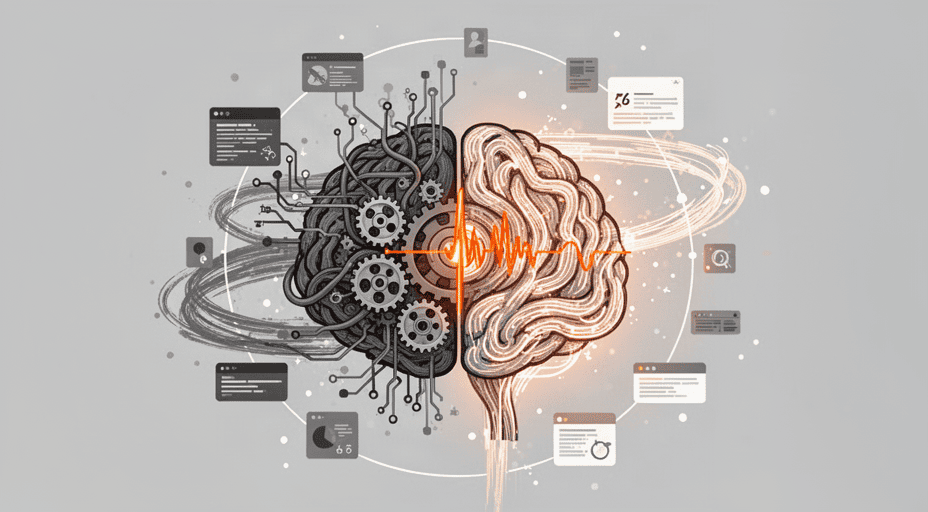
Founders are using AI to handle customer support, generate content, and write code - enabling them to run one-person businesses at an unprecedented scale.
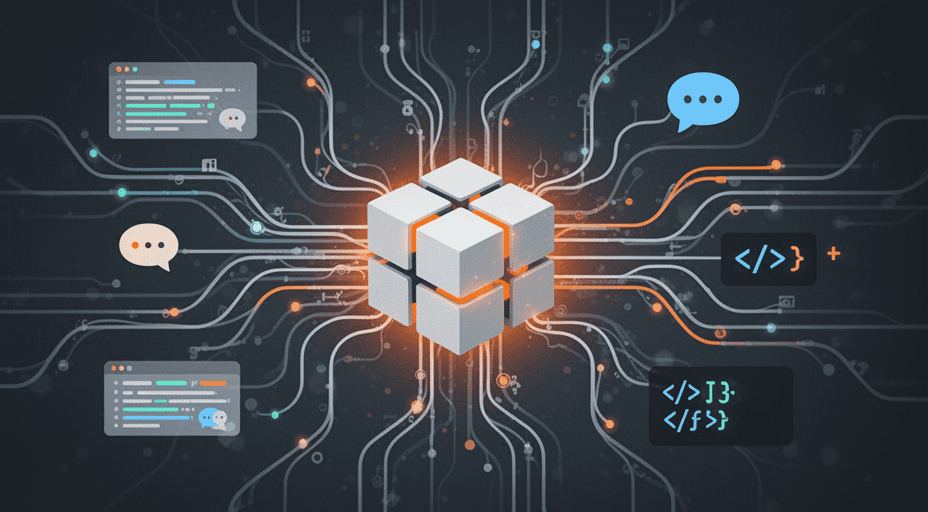
Many still believe the one-person business is a story of sacrifice - working 80-hour weeks, juggling everything from sales and marketing to customer service, accounting, and photo editing. But a paradox is emerging: the most solitary founders now have more free time than even 10-person startups. They aren’t working less. They’ve redesigned what “working” means entirely.
The reality in 2026 shows that a single founder can run an e-commerce store serving 2,000 customers, publish daily content across four platforms, and continuously update internal software - all without hiring a single full-time employee. The secret isn’t some general-purpose super-AI. It lies in how they’re re-examining the core nature of three essential activities: customer support, content creation, and coding.
The three most draining activities - and their true nature
Before thinking about tools, we must strip away the glamour of “virtual assistants” to see the mechanical core beneath.
Customer support is a pattern-matching and controlled sampling problem
When a customer sends a message like “Where is my order #12345?”, the essence of this request isn’t a conversation. It’s a natural language query into a database. The AI doesn’t “understand” the customer’s frustration. It maps the input string into an intent, triggers an action - calling a shipping tracking API - and fills the result into a response template.
Key insight: The quality of automated customer support doesn’t depend on AI’s ability to craft eloquent sentences. It depends on the cleanliness of order data, the accuracy of the knowledge base, and clear branching logic between what can be answered automatically and what must be escalated to a human. If you lack a well-structured internal document repository, every chatbot will fail equally.
Content creation is about controlling the probability distribution of words
A blog post, marketing email, or video script isn’t a product of pure creativity. At the token level, the language model simply predicts the next word based on its training data. When a founder uses AI to “create content,” they’re actually performing three actions: constraining the sampling space (using system-level prompts, tone guidelines, and audience targeting), injecting raw insights (providing proprietary data, personal opinions, and firsthand experiences the model lacks), and filtering outputs (selecting and editing parts that deviate from the intended direction).
Expert note: AI-generated content has no intrinsic value. It’s only a malleable shell. Value lies in the founder’s exclusive insights - the unique data no other model can train on. If you lack such exclusive data, you’re merely contributing more noise to already identical feeds.
Coding is about translating intent into verifiable executable logic
When a founder asks AI to “write a Python script that sends automated emails to cart abandoners,” the model doesn’t invent a solution. It searches a vector space of similar code from billions of open-source lines and stitches them together. The real power lies in the founder’s ability to verify immediately. If they can’t read a stack trace or understand how SMTP environment variables work, they’ve just created a double-edged sword that could get their email system blocked for spam.
Rebuilding the business model: Founder as workflow designer, AI as muscle
When these three activities are broken down to their core, the solo founder business model stops being about a superhuman individual doing everything. It becomes a three-layered system:
1. Raw data layer: Contains all proprietary business knowledge - refund handling procedures, verified FAQs, customer analytics data, and stable running code.
2. Language model layer: Acts as a transformation engine. It takes input signals (customer questions, content ideas, feature requests) and raw data, then outputs raw deliverables (responses, drafts, code snippets).
3. Control and feedback layer: This is where the founder operates. Instead of writing each response, they write system prompts, set automation thresholds (e.g., if a customer email contains “lawsuit” or “refund,” automatic replies are blocked), and periodically check outputs.
The founder’s role shifts from laborer to system designer. They spend mental energy building reliable automated loops, rather than being trapped inside them.
Execution strategy: Step-by-step construction of three automation machines
Below is how to implement each area - focused on operating principles, not trendy tool names.
Customer support: Build tracks for the train, don’t release it into the forest
A common mistake is connecting a chatbot directly to an entire website, giving it access to all databases. The correct approach is to define a finite set of allowed actions.
- Step 1: Intent classification. Use a small, low-cost language model to classify customer queries into fixed groups:
order_tracking,return_request,product_info,other. - Step 2: Write rigid response templates. For each group, don’t let AI freely craft responses. Define strict templates: “Hi [Name], your order [ID] is currently [Status]. Expected delivery is [Date]. Tracking link: [Link].” The model’s only job is to fill in the blanks.
- Step 3: Set up handover mechanisms. When the model’s confidence is low (below your set threshold), or if the customer uses emergency keywords, freeze the conversation and send it directly to the founder’s inbox with context summary.
Content creation: Shift from “write for me” to “recombine insights”
Don’t ask AI to “write a blog post about digital marketing.” That creates valueless content. Do the opposite.

- Step 1: Capture raw insights. Each day, the founder should record or jot down real business observations. Example: “Today I noticed customers buying Product A rarely read the description - they only check the images.”
- Step 2: Feed insights to AI with a challenge. Prompt: “Based on this observation, suggest three counterarguments. Then propose a blog structure to analyze this phenomenon.”
- Step 3: Rewrite in your own voice. Take that structure and rewrite each section in your personal style, adding specific product details and internal metrics (rounded or anonymized as needed). AI provides the skeleton; exclusive insights provide the flesh.
Coding: Build a private module library, not full projects
A founder shouldn’t dream of building a complete application from scratch using AI. Instead, focus on single-purpose scripts and gradually assemble them.
- Step 1: Create a validation module. Ask AI to write one Python function:
def connect_to_smtp(email, password) -> smtp_connection. Then test it in isolation. - Step 2: Create a send module. Write a function
send_email(connection, to, subject, body). - Step 3: Assemble via configuration. Only after both modules have run stably for a week, write a main script that calls them. When errors occur, the founder fixes just one small module, not the entire system.
Core mindset: Every piece of AI-generated code must be small enough that you can understand and explain it in under 30 seconds.
Case study: From bedroom to self-running system
Mai Linh, founder of Aether Content Studio - a service producing SEO content for local beauty brands - runs a monthly revenue equivalent to a 5-person agency entirely on her own, powered by an AI toolset.
Linh’s challenge: Each client requires 8 blog posts, 12 social media posts, and 4 marketing emails per month. With 7 clients, the workload would be impossible manually.
Linh didn’t use AI to “write for her.” She built the following pipeline:
- Insight collection system: Each client provides raw data on new products, common customer questions, and brand voice. Linh uses a small Python script to extract data from Excel files and store it in a per-brand vector database.
- Content production system: When writing for Brand A about “how to use vitamin C serum,” Linh doesn’t ask AI directly. She uses a pre-written system prompt: “You are a dermatologist. Below is product data and five real customer questions. Create a detailed outline based on this information.” She then writes the final piece herself, using AI only for grammar checks and sentence refinement.
- Customer support system: On Aether’s website, the chatbot is trained to answer only three questions: “Service pricing,” “Project status,” and “Request revision.” For project status, the chatbot queries Linh’s Notion API and returns real statuses. For revisions, it creates a ticket and sends a Slack alert.
- Internal coding system: Linh uses Cursor to create a small dashboard in Streamlit, displaying real-time project status, connecting to customer databases, and automatically sending weekly report emails. She doesn’t know JavaScript, but can read and modify basic Python functions.
Result: Linh spends 4 hours daily on quality control, client relationship development, and system improvements. The rest is handled by data and models. She doesn’t sell her time. She sells an AI-amplified content production system.
Comparison table: AI approaches for one-person businesses
The table below analyzes three main paths founders take when integrating AI into operations, based on cost, control, and risk factors.
| Solution | Setup cost | Level of control | Biggest risk | Best suited when |
|---|---|---|---|---|
| Off-the-shelf AI platforms (Chatbot-as-a-Service, Content Generators) | Low (monthly fees) | Very low. You depend on the provider’s changing policies. | Customer data leaks into shared training models; content duplication across users. | Need to test ideas quickly, lack proprietary data. |
| Self-built pipeline using platform APIs (OpenAI, Anthropic, Gemini) | Medium (pay-per-token, initial dev cost) | High. You control all prompts, data structure, and security logic. | API bills spike without loop control; confusion between test and production environments. | Have clean internal data, want long-term competitive advantage. |
| Run open-source models locally (Llama, Mistral) on personal machine or VPS | High (hardware costs, setup time) | Absolute. Data never leaves your machine. | High technical maintenance; smaller models may lack complex reasoning. | Handling extremely sensitive data (medical, personal finance); strong technical foundation. |
Readiness assessment scorecard
To decide whether a one-person business should invest in AI automation, use the following scorecard. Scores are based on realistic founder capabilities, not future aspirations.
| Criterion | Score (1-10) | Notes |
|---|---|---|
| Internal data cleanliness | 8 | Processes, sample responses, product info are standardized and well-documented. |
| Basic technical ability | 6 | Founder can read error logs, configure API keys, and run scripts in terminal, but can’t build full-stack apps. |
| Task repetitiveness | 9 | Over 80% of customer requests and content production follow similar structured patterns. |
| Tolerance for automation errors | 5 | Some automated mistakes could lose customers (wrong pricing, order mix-ups). Requires tight validation. |
| Willingness to spend time on system design | 7 | Founder is ready to invest 2–3 weeks upfront to build the pipeline, not just do manual work. |
Total score: 35/50 (Scale: 1–4 = not ready for deep automation; 5–8 = start with small monitored modules; 9–10 = system mature for broad automation.)
With a score of 35, this business is at the threshold of “automatable scalability.” The biggest risks are error tolerance (score 5) and technical ability (score 6). This means the founder should invest in a “buffer” layer - a double-check mechanism before any automated content or response reaches customers. For instance: all automated emails are drafted first, and the founder reviews them during the last 15 minutes of the day, rather than sending immediately.
The future of one-person businesses: When AI stops being just a tool
In 2025–2026, models began reliably performing planning and tool use. This means soon, a founder could assign AI not just isolated tasks, but vague goals. Example: “Increase open rates for cart abandoners from the last 30 days.” AI would automatically analyze data, propose A/B tests, draft emails, send them, and report results.
However, this raises a new challenge: the difference between one-person businesses will no longer lie in technology. When every founder can give voice commands, advantage will shift to those with the richest exclusive data and strongest ability to ask the right questions. An AI system can draft thousands of emails, but without real human reaction data to each subject line, it’s just a sophisticated spam generator.
The one-person business will no longer be about “one person.” It will become a hybrid entity where the boundary between human and machine blurs. The most successful founders won’t be those best at using AI, but those who best understand customer behavior - the only living dataset no mathematical model can generate on its own.
This analysis shows that running a one-person business at an unprecedented scale isn’t a fairy tale about technology. It’s the result of disciplined system design, where every task is deconstructed to its essence and AI is confined within safe, precise boundaries. Founders achieving this aren’t working less. They’re doing an entirely different kind of work.
Related Posts

AI Dependence Is Changing How Small Businesses Make Business Decisions
AI Marketing for SMEs: Why Small Businesses Prioritize This Area

The AI Revolution Is Lowering Software Development Barriers to Nearly Zero, Unleashing an Unprecedented Wave of Indie Hackers

Founders Are Using AI to Scan Reddit for Real Customer Problems Before Writing a Single Line of Code

AI Solves the Staffing Shortage Puzzle: How Small Businesses Can Scale Without Hiring More