How the Next Wave of AI Will Reshape Small Businesses in the Near Future
When it comes to artificial intelligence, the natural reflex of most small business owners remains: “That’s for big corporations we can’t afford it.” This reflex has been shaped over a decade of media portraying billion-dollar deep learning machines owned by Google, Microsoft, or Amazon.
In 2026, running a chatbot that serves hundreds of customers daily costs just a few cents in inference. A language model powerful enough to review contracts, classify emails, or extract data from invoice photos can run directly on a desktop computer priced under $2,000 without sending a single byte of data to the cloud. These figures overturn every outdated assumption about competitive capability.
What’s happening isn’t just a minor upgrade to ChatGPT. It’s an entirely new architectural wave where businesses with only 5–10 employees can achieve information processing and operational capacity equivalent to a team of 30 people from just three years ago.
The Three Pillars of the New AI Wave
To understand why small businesses now have an unexpected advantage in this shift, we must unpack the three foundational technical mechanisms quietly leveling the playing field.
From Language Models to Action Systems
The first generation of ChatGPT could only generate text responses. By 2026, the paradigm has shifted: AI agents are no longer black-box text generators, but orchestrators they receive a goal, autonomously select tools (sending emails, querying databases, creating documents, scheduling meetings), execute action sequences, verify outcomes, and self-correct if needed.
The core mechanism is the Reasoning-Action-Observation loop. An agent doesn’t require step-by-step human programming. You simply define the starting point (e.g., “an email request for a wholesale quote arrives”) and the end goal (“a PDF quote is sent to the customer, and CRM is updated”). The agent handles everything in between calling APIs, managing errors, and coordinating tasks.
For small businesses, the implications are tangible: order processing, post-sale support, appointment scheduling, and invoice data entry tasks consuming 60–70% of administrative time can now be delegated to agents at a monthly operating cost measured in dollars instead of thousands in salaries.
Key Takeaway: AI is no longer just a “question-answering tool.” It has become a digital workforce layer capable of executing end-to-end business processes.
The Power of Small Models and Local Reasoning
The previous trend forced all businesses to rely on bulky cloud APIs, where costs scaled with usage and sensitive data was exposed to risk. In late 2025 and early 2026, breakthroughs emerged with Small Language Models (SLMs) ranging from 1 to 8 billion parameters, trained for specific purposes.
A quantized 4-bit 7B model can run entirely on consumer-grade hardware like Apple Silicon M4 chips or mid-tier GPUs such as the RTX 4060, achieving inference speeds of 40–60 tokens per second fast enough for most office tasks. This is made possible through knowledge distillation from larger models combined with fine-tuning on domain-specific instruction data.
This shift solves the “data leaving the premises” problem. A six-person graphic design studio, for example, can train an internal model on all past project briefs, client feedback, and design samples all stored on a local NAS drive, never touching the internet. Initial hardware investment is under $2,000; ongoing monthly cost is just electricity.
Key Takeaway: Reasoning power is being decentralized from exclusive cloud providers, returning data control to small users.
Private Data – The Final Competitive Edge
General-purpose LLMs like GPT-4o or Claude 3.5 are trained on vast internet datasets. They excel at general knowledge but struggle with the specific context of a suburban building supply store or a local insurance agency.
Small businesses possess something big tech lacks: high-density, real transactional data within a narrow scope. Five years of sales records, 20,000 customer emails, complete history of won/lost quotes, recorded customer service calls. This is the “gold mine” for training models that deeply understand your customer base, brand voice, and niche market behaviors.
Today, Retrieval-Augmented Generation (RAG) combined with fine-tuning on private data is available via no-code interfaces. A bakery owner can upload 50 PDFs of recipes, workflows, and sample emails, and instantly get an internal chatbot that accurately responds to how to handle mold complaints during rainy season based solely on their accumulated experience.
The convergence of these three mechanisms creates an unprecedented scenario: small businesses can leverage affordable general reasoning from base models while embedding proprietary intelligence to build non-replicable competitive advantages.
Building an AI-Centric Operating Architecture
Simply giving employees a ChatGPT Plus subscription isn’t a strategy. What’s needed is stitching these capabilities into a lean operating system where data flows continuously, agents respond to events, and humans intervene only at high-value decision points.
A reference architecture for businesses under 20 people consists of three simple layers:
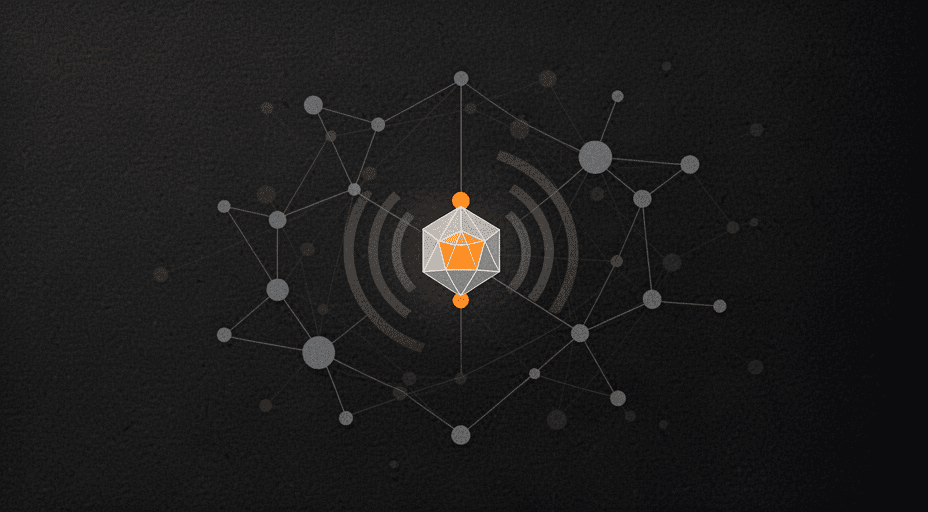
1. Data Layer: Sources (email, web forms, cameras, mini ERP, Excel/CSV files) are synced to a single repository either an internal NAS or well-organized cloud storage like Google Drive. No complex data lake required.
2. Intelligent Processing Layer: Where agents operate. Each agent handles a specific workflow: Quoting Agent, Customer Support Agent, Invoice Classifier. Configured via workflow platforms (n8n, Langflow), connected to an LLM endpoint (low-cost OpenAI API or local model via Ollama/LM Studio).
3. Human Oversight Layer: All critical actions (quotes over $500, complaint responses) pause at an “approval pending” state. The interface is a simple dashboard Trello, Notion, or a Slack channel where the business owner reviews and approves in 30 seconds.
When AI Goes to Work: The Case of Cedar & Pine Imports
Consider how a hypothetical home goods importer, Cedar & Pine Imports (annual revenue $2.1 million, 10 employees), implemented this architecture.
Context: Cedar & Pine specializes in importing Swedish kitchenware for small retailers across the U.S. Their wholesale team receives 50–70 quote requests daily via email. Each request requires checking inventory in an internal system, calculating tiered discounts (Gold/Silver/Bronze) from CRM, drafting a quote email with product images, and updating status. One employee spends ~12 minutes per request totaling 14 hours of labor daily.
Implementation: They used n8n (self-hosted on an internal server) to build a workflow called “Automated Quoting.” It triggers whenever a new email arrives at [email protected]. Steps include:
- An AI agent uses GPT-4o mini (via API, ~$0.15 per million input tokens) to extract customer name, requested product codes, and quantities.
- The workflow calls internal APIs to Airtable-based inventory and CRM systems ($24/month) to retrieve stock levels and discount tiers.
- A second agent drafts the quote email using templates, embeds product images, calculates total in USD.
- The draft is sent to a private Slack channel with “Approve” and “Reject” buttons. The owner spends 15 seconds reviewing and approving on their phone.
Results after 3 months:
- Average processing time per request dropped to 2 minutes (including approval). Total labor time decreased from 14 hours/day to 1.5 hours/day.
- Sales staff were freed to make proactive customer calls generating an additional $80,000 in quarterly revenue.
- Monthly AI API cost: under $60. Infrastructure (n8n server, Airtable): $40. Total: $100/month, saving an estimated $28,000/year in opportunity cost.
- Data entry errors dropped by 90% due to elimination of manual input.
This implementation didn’t require AI engineers. A freelancer with workflow expertise set it up in 30 hours, with a one-time setup cost of $2,500.
Tool Selection: Comparing Deployment Platforms
Several approaches exist today for building AI agent systems in small businesses. The table below compares the most common solutions based on practical criteria.
| Solution | Starting Cost (USD/month) | Ease of Use (1-10) | Internal System Integration | Data Security | Scalability |
|---|---|---|---|---|---|
| OpenAI Custom GPTs | 20 (ChatGPT Plus) | 9 | Limited (only via public API) | Low (data sent to OpenAI) | Medium |
| Microsoft Copilot Studio | 200 | 7 | Good with Microsoft 365, limited with other systems | Medium (depends on tenant) | Good |
| n8n + LLM (self-hosted) | 0 (open-source software) + API/model costs | 5 | Excellent (connects to any API, database) | High (data on internal server) | Very High |
| Relevance AI (Agent Platform) | 30 (for small teams) | 8 | Good via Zapier/API integrations | Low (cloud-based) | Medium |
| Llama 3 + Ollama + n8n (local) | 0 (electricity + one-time hardware cost $1,500–$2,000) | 4 | Excellent (full control) | Very High (100% offline) | Limited by hardware |
Assessing Small Business Readiness
Not every small business can adopt this wave immediately. The scorecard below helps self-assess readiness based on real-world conditions.
| Criterion | Score (1-10) | Notes |
|---|---|---|
| Current Level of Data Digitization | 5 | Many still use paper or scattered Excel files, lacking centralized databases. |
| Repetitiveness of Core Processes | 8 | Most quoting, customer support, and accounting tasks follow patterns, making them easy to standardize into workflows. |
| Team’s Technical Skill Level | 4 | Generally low; initial setup may require freelancers or consultants, but operation post-setup needs no coding. |
| Acceptable Initial Investment Cost | 6 | $1,500–$3,000 is feasible for most, but hesitation around tech spending remains high. |
| Risk of Hallucination and Compliance | 3 | Agents may still generate incorrect quotes or inappropriate responses; mandatory human approval loops are essential. |
Total Score: 26/50 – Fair (5–8 per criterion). This indicates small businesses are now minimally ready to begin experimentation but require cautious adoption, prioritizing human-in-the-loop approval. The weakest areas are hallucination risk and digital skill gaps, requiring smart training or outsourcing strategies.
Forecast 2027–2028: A New Playing Field for Small Businesses
These three pillars will continue evolving and converging, driving structural changes over the next two years.
-
Packaged Agent Marketplaces: “Agent stores” will emerge, similar to app stores, where independent developers sell industry-specific agents: reservation managers for restaurants, customer care bots for hair salons, claims processors for insurance agents. Small businesses will simply buy, plug in API keys, and run. Expected cost: $50–$200/month.
-
Ubiquitous On-Device AI: Computers released from 2027 onward will come standard with NPUs powerful enough to run 8B models locally. Owning a fully offline “digital assistant” on your laptop will be as common as owning Microsoft Office.
-
Data as Valued Asset: During business acquisitions, beyond physical assets and customer lists, the “digital brain” fine-tuned models and structured data repositories will become a formal intellectual property category with monetary valuation.
-
Competition Shifts from Scale to Learning Speed: Advantage will no longer lie with who has more employees, but who can close the feedback loop “data → better model → better service → more data” faster. Small businesses cultivating a culture of capturing and digitizing every interaction from 2026 onward will build insurmountable “data moats.”
Conclusion
The next wave of AI is not an expensive arms race. It’s a decentralization of reasoning and action directly into the hands of small entrepreneurs. The three components execution agents, local small models, and private data form a “digital skeleton” that any 10-person business can assemble for less than the monthly cost of a Facebook ad campaign.
The prerequisite isn’t deep machine learning expertise, but a willingness to rethink what “staff” and “assets” mean. Start with a practical question: which process in your company repeats daily and consumes three hours of work? That’s exactly where a $2-per-day agent can take over.
Related Posts
AI Dependence Is Changing How Small Businesses Make Business Decisions
AI Marketing for SMEs: Why Small Businesses Prioritize This Area

The AI Revolution Is Lowering Software Development Barriers to Nearly Zero, Unleashing an Unprecedented Wave of Indie Hackers
Founders Are Using AI to Scan Reddit for Real Customer Problems Before Writing a Single Line of Code
AI Solves the Staffing Shortage Puzzle: How Small Businesses Can Scale Without Hiring More