Is AI Really Stealing Jobs in SMEs? What the Data Says in 2026

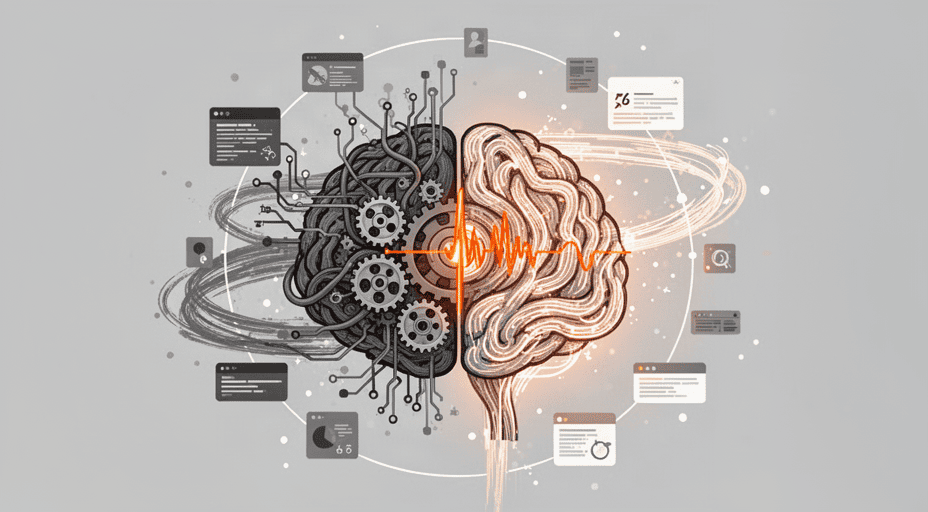
By 2025, as the ChatGPT hype began to cool, SME owners were finally confronting a tough question: when their office lease comes up for renewal at year-end, should they cut half their administrative staff to afford a few Copilot licenses? Rumors swirling in entrepreneur groups painted a dystopian picture of AI replacing humans en masse. But the full picture from reputable reports is far more complex. This isn’t a sweeping takeover it’s more like cellular mitosis, where routine roles split and multiply into entirely new positions. The real challenge for SMEs isn’t whether AI will “steal” jobs, but how they interpret the data to decide: should they design their workforce for yesterday’s model, or for the structure emerging tomorrow?
The Big Picture and the Numbers That Cause Confusion
The World Economic Forum’s 2023 Future of Jobs Report forecasts that by mid-decade, automation and artificial intelligence could eliminate around 85 million jobs, while simultaneously creating 97 million new roles primarily in fields requiring digital skills, data analysis, and complex human interaction. At the same time, a survey by the European Association of Small and Medium-sized Enterprises (SMEunited) highlights that over 60% of SMEs have never hired a dedicated technology role. This gap creates a paradox: macro-level data suggests job growth, but micro-level data from individual small businesses cries out in distress as they pay salaries for skills that no longer match market needs.
The key point is that job losses and gains are not evenly distributed. Machine learning has dismantled manual data-processing roles: data entry, timekeeping, routine reporting, and templated email responses. But it has simultaneously exploded demand for model supervisors, data bias auditors, and system integration engineers. The core issue isn’t a lack of jobs it’s that the SME workforce is stranded at a train station while the skills train has already departed.
The Hidden Three-Layer Mechanism Behind “Job Theft”
To decide whether to downsize, business owners need to deconstruct “job theft” into three underlying operational mechanisms.
Layer One: Replacing Closed-Loop, Repetitive Tasks
This is the most visible layer. In a printing workshop, checking design files for font errors was traditionally done by two rotating employees. When a computer vision model trained on 10,000 samples was introduced, the owner found it more accurate, faster, and required fewer staff. But the next move is what separates successful businesses: do you retrain those two employees as data labelers and AI output quality controllers, or do you pay them one month’s salary and terminate their contracts?
Data from the German Association of Medium-Sized Businesses (Der Mittelstand BVMW) shows that workshops choosing the first option had survival rates 2.3 times higher after digital transformation than those who simply cut staff. The reason isn’t sentimentality it’s the cost of rehiring when new skills are in short supply.
Layer Two: The Productivity Amplification Effect
A senior accountant equipped with AI-powered document analysis can process 200 invoices per hour instead of 50. If the business doesn’t scale, it may keep invoice volume constant and reduce accounting staff. But SMEs can choose another path: use the freed-up time for that employee to take on real-time cash flow analysis, financial advisory for clients, or building bad-debt warning dashboards tasks previously impossible due to workload. In this case, AI doesn’t “steal” a job; it transforms it into a higher-value role.
Layer Three: Industry Boundary Shifts
A 20-room boutique hotel once needed 24/7 front desk staff. A chatbot integrated with the room management system can now handle bookings, answer basic questions, and automatically send check-in codes. But at the same time, travelers now demand more personalized experiences: knowing dietary restrictions, suggesting itineraries based on weather and health, or remembering past preferences. These experiences can’t be fully automated. They require a new role: the data-informed guest experience curator. The hotel still needs people just a completely different profile.
These three layers operate simultaneously, creating the greatest friction at the reskilling stage. SMEs fail most often because they see only Layer One and ignore the other two.
Restructuring the SME Labor Ecosystem
From these three mechanisms, we can redraw the labor ecosystem for an SME undergoing transformation without layoffs. The new structure is no longer divided by departments, but organized into three flows.
Routine Operations Flow: Where AI and RPA handle paperwork, data entry, and periodic reporting. Humans here serve as exception handlers. For example: a bot processes 100 orders, but when it encounters an invalid shipping address, it pauses and escalates to a human for intervention.
Value Creation Flow: Comprising employees freed from manual tasks, now focused on analysis, customer empathy, and designing differentiated solutions. A former administrative staff becomes an automation rule designer.
Training & Feedback Loop: This is the critical piece SMEs must have a small team that regularly labels industry-specific data, fine-tunes models, and measures bias. This team can be drawn from long-tenured operational staff, provided they receive additional training in machine communication.
A pharmaceutical distributor in the Mekong Delta, after deploying AI for inventory forecasting, used two warehouse workers with 8 years of experience to label defective product samples. This trained the system to detect early signs of mold in shipments. No one was laid off; instead, the payroll budget was maintained while packaging error rates dropped by 40%.
Implementation Strategy: Workforce Preservation Guided by Data
SME owners need a clear roadmap, starting with correctly interpreting internal data.
Four Steps for a No-Layoff Transformation
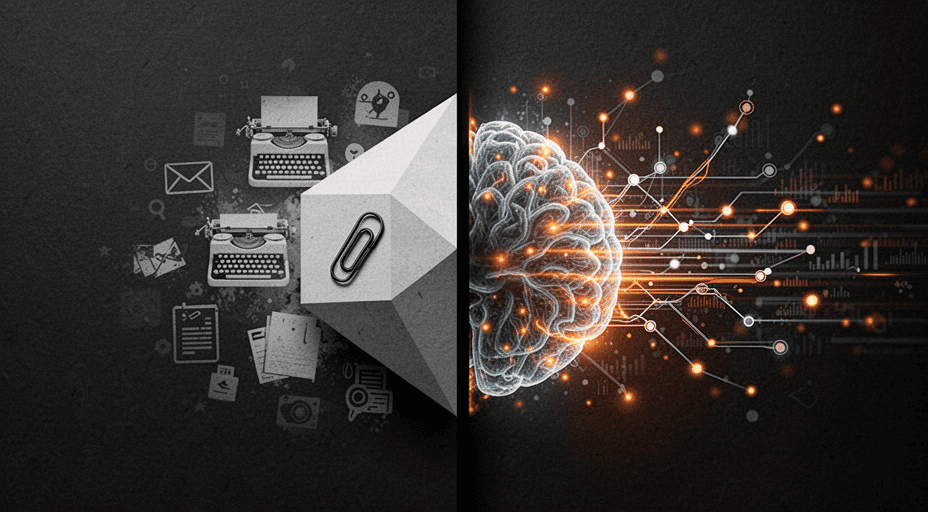
Step 1: Audit tasks, not job titles. Use task-mining tools for two weeks to precisely list every action: who does what, how long it takes, and how repetitive it is. Results are often surprising: employees labeled “customer service” may spend 70% of their time copy-pasting data between software. That’s not a skill to protect it’s a prime candidate for automation.
Step 2: Score each task for replaceability and transformability. Each task receives two scores from 1 to 5: how easily it can be automated, and how valuable it becomes when humans are freed. Tasks with high replaceability and low transformability go to machines. Tasks with low replaceability but high transformability become the new core responsibilities for staff.
Step 3: Design a 12-week short-term training roadmap. Don’t send employees to general AI courses. They need to learn how to operate a chat interface, verify model outputs, and write clear prompts. A tailor learning to write prompts for Midjourney to sketch garment designs 10 times faster than hand-drawing that’s practical training.
Step 4: Measure using the Net Job Creation Index. Every quarter, calculate: number of new roles created due to AI minus number of roles no longer needed. If this index is positive and feedback culture is maintained, the business is on the right track.
Lessons from MerakiEdu, an EdTech SME
MerakiEdu is a 45-person SME in Da Nang specializing in online courses for children. In early 2025, they faced a dilemma: ChatGPT reduced content drafting time from 3 days to 3 hours. The leadership’s first instinct was to cut half the learning design team. However, after task auditing, they realized this team spent most of their time on tasks AI excels at: drafting multiple-choice questions and writing video scripts from templates. But AI couldn’t replace interviewing 10 parents to understand why children dropped out, or designing interactive VR experiences for history lessons.
The company decided to retain all staff and invested three months in retraining them as “learning experience architects.” Each was given a Claude account and trained in multi-layered prompt engineering, then used their freed-up time to engage directly with customers. After eight months, course completion rates above 80% doubled, while labor costs remained unchanged. MerakiEdu not only avoided layoffs but also created a new internal role for student behavior data analyst, filled by a current employee.
Comparing AI Response Strategies for SMEs
Not all SMEs have the resources of MerakiEdu. The table below compares four common approaches when AI enters the business.
| Solution | Initial Cost | Time to See Results | Impact on Company Culture | Current Job Preservation | New Job Creation Potential |
|---|---|---|---|---|---|
| Layoffs & Outsourced AI | Low | Immediate | Severe trust erosion, loss of tacit knowledge | Very Low | Low |
| Hiring New Digital-Skilled Staff | High | 1–3 months | Generational conflict, poor integration | Medium (retains old staff but risks resentment) | Medium |
| Internal Reskilling & AI Integration | Medium | 2–6 months | Initial skepticism, turns positive with strong leadership | High | High |
| Using AI Without Structural Change | Low | Immediate | Good short-term, but stifles long-term growth | High (temporary) | Very Low |
Data from digital transformation support programs in Nordic countries shows that companies choosing internal reskilling have significantly higher survival rates after three years, despite often slower productivity growth in the first six months. This isn’t about kindness it’s long-term calculation.
Scorecard: Evaluating Job Preservation and Growth
To help SME owners make decisions, the following quick scorecard rates key criteria on a 10-point scale, based on field observations and behaviors of companies that have implemented AI.
| Criterion | Score | Notes |
|---|---|---|
| Maintaining Current Employment | 8 | Only reduce staff if employees voluntarily leave due to inability to adapt. |
| Post-Transformation Productivity Recovery Speed | 7 | Productivity dips slightly in the first 3 months as staff learn new skills. |
| Long-Term Competitive Advantage Potential | 9 | New services emerge from upskilled staff; hard to replicate. |
| Employee Engagement | 8 | Staff feel secure and invested in; low voluntary turnover. |
| Total Cost Relative to SME Budget | 6 | Requires investment in tools and consultants; needs clear financial planning. |
| Average Total Score | 7.6 | Solid score; can reach excellence with industry association support. |
Interpretation: With a 7.6/10, the no-layoff internal reskilling and AI integration model is highly feasible. The only weakness is initial cost but government training support policies (e.g., the Small Business Digital Transformation Support Program Phase 2) could raise this criterion to 8, pushing the total near 8.5. Companies that choose layoffs may score higher on short-term finances, but their total score doesn’t exceed 5 when factoring in long-term competitiveness and the risk of losing tacit knowledge.
2026 Trends and the SME’s Role in the New Job Landscape
As we enter 2026 and comprehensive data on AI’s real impact on SMEs begins to emerge, three trends are likely to shape the game.
First, the “soft skills ripple effect.” Skills seemingly unrelated to technology asking questions, hypothesizing, cross-verifying become the decisive factors in SME workforce success. A garment worker who can read an AI dashboard detecting fabric defects will be three times more productive than one who just operates the machine. Industry associations are expected to launch micro-credentials for these hybrid roles.
Second, the end of mass outsourcing models. Unlike large corporations, SMEs cannot dismantle entire departments and outsource full AI management. Tacit knowledge about customers and internal processes cannot be extracted into prompts. Preliminary data shows that businesses retaining staff and using AI as an amplifying layer enjoy significantly more stable gross profit margins.
Third, push-pull policy mechanisms. Many governments are preparing flexible job insurance schemes: if an SME commits to no layoffs and instead reskills staff, they will receive corporate income tax reductions for two years. This is no longer social welfare it’s an investment in local economic stability.
In this landscape, SMEs are not victims. With their small size and lean structure, they can adapt faster than any large corporation. A retail shop owner in Buôn Ma Thuột can test a personalized chatbot with 200 customers in a week a process that would take a thousand-employee supermarket chain a quarter to approve. This agility is the decisive competitive advantage as the second wave of AI autonomous agents begins infiltrating more complex tasks by late 2026.
The question for SME owners today isn’t “Will AI steal my jobs?” but “How can I use AI to have my employees do things competitors haven’t even imagined yet?” The 2026 data, when read through the lens of strategy rather than panic, will show that AI doesn’t take away jobs it only takes away jobs defined the old way. The rest depends on how quickly businesses redefine them.
Related Posts

AI Dependence Is Changing How Small Businesses Make Business Decisions

AI Marketing for SMEs: Why Small Businesses Prioritize This Area

The AI Revolution Is Lowering Software Development Barriers to Nearly Zero, Unleashing an Unprecedented Wave of Indie Hackers

Founders Are Using AI to Scan Reddit for Real Customer Problems Before Writing a Single Line of Code

AI Solves the Staffing Shortage Puzzle: How Small Businesses Can Scale Without Hiring More