Why Industry Experts Predict AI Infrastructure Will Be the Top Business Barrier This Year
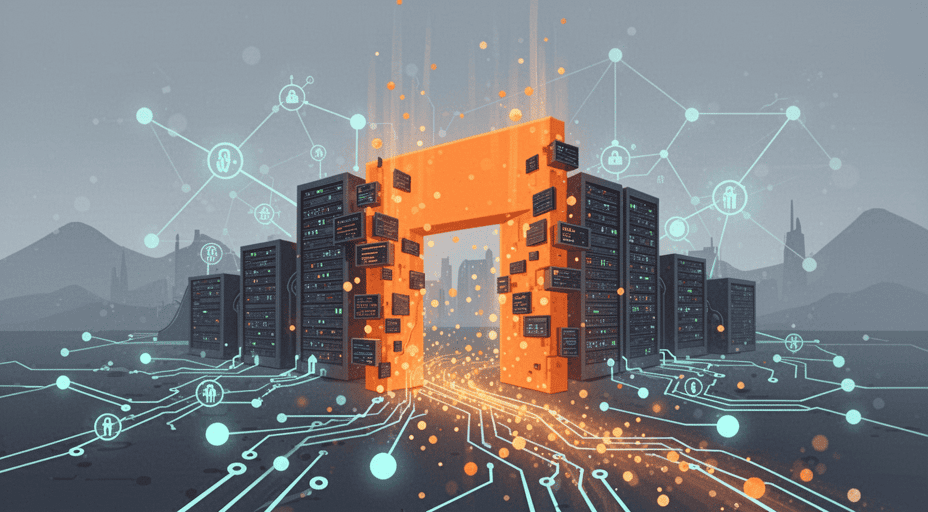
The paradox is becoming clearer than ever. We have large language models surpassing most human benchmarks, graphics chips with tens of thousands of processing cores, and cloud services enabling small startups to access massive computing clusters within minutes. And yet, the rate at which AI projects actually enter production remains surprisingly low.
The surprise isn’t that the technology lacks capability. The crux is that we’ve focused too heavily on the model and forgotten the very thing that allows the model to live, breathe, and respond in real-world environments—the deployment infrastructure. Many seasoned industry experts now warn that within the next 12 to 18 months, AI infrastructure will no longer be a purely technical topic. It will become a strategic barrier that determines who benefits from AI and who remains stuck in the lab.
Warnings from those who’ve built the systems
When a lead engineer at a major cloud infrastructure company says, “I’m not worried about how smart AI is—I’m worried about the cost of every time AI thinks,” this isn’t sensationalism. It’s an accurate description of a bottleneck now squeezing numerous businesses. Most have succeeded in the proof-of-concept phase. They’ve built chatbots, recommendation systems, image analyzers, even automated scheduling assistants. But when stepping into real production—where thousands of requests per second must be handled, data processed in milliseconds, or safety requirements are stringent—the entire system begins to break down.
Key Takeaways:
- The barrier isn’t in algorithmic sophistication, but in the ability to operate continuously and safely.
- Businesses are shifting from “trying AI” to “living with AI,” yet infrastructure is unready.
- Hidden costs from weak infrastructure can erase every benefit the model delivers.
Three choke points within the infrastructure black box
To understand why AI infrastructure has become the #1 barrier, we must break it down into its material and logical primitives. In its simplest form, every operational AI system consists of three layers: computational hardware executing math, the data flow feeding it, and control mechanisms that take decisions into the real world. All three layers are cracking.
Execution Layer: Memory is more expensive than thinking
Much of an AI system’s cost isn’t in the electricity consumed by GPUs, but in memory bandwidth and the capacity required to store model parameters during runtime. The larger the model and the more parameters it has, the greater the data movement between chip and memory during each prediction—growing almost linearly. That’s why a product recommendation system powered by a few-billion-parameter model might run smoothly in a test with 10 users but collapse under 10,000 simultaneous requests. The bottleneck isn’t matrix multiplication—it’s the memory’s inability to load weights fast enough.
Businesses often mistakenly believe that renting more GPU-equipped virtual machines is sufficient. But in real-world operations, sudden latency spikes don’t arise from a lack of compute cores, but from memory contention and limited internal network bandwidth. By 2025, most traditional data centers remain optimized for classical web applications (handling simple HTTP requests), not the massive vector computations of deep learning models. This incompatibility drives costs up, increases response times, and erodes the model’s practical value.
Data Flow Layer: Every pipeline is leaking
Every AI model needs input data, yet businesses often underestimate the volume and quality involved in moving data from its origin (warehouses, apps, sensors) to processing (the model) and back. During this journey, data undergoes format conversion, cleaning, joining, and consistency checks. A typical AI data pipeline includes 7 to 12 intermediate steps—each one a potential source of distributional drift between training and real-world data.
The problem isn’t just errors. The storage and transfer costs for inference are rising faster than server leasing costs. When a factory deploys a visual defect detection system, hundreds of terabytes of images per month must be processed in real time. If storage isn’t configured for high-speed random reads, the model waits—and so does the production line. At enterprise scale, that idle time can cost hundreds of thousands of dollars per minute. That’s enough to turn a project with positive ROI into a significant loss.
Control and Scaling Layer: Automated but not autonomous
After a model is deployed, businesses need mechanisms to auto-scale, load-balance, track accuracy, and—most importantly—detect model drift. Numerous companies have had to decommission AI systems because, after three months of operation, outputs became meaningless—without anyone noticing.
True AI operations infrastructure must: (1) log all inputs and outputs, (2) continuously compare them to baseline distributions, and (3) automatically trigger retraining upon detecting deviation. In reality, this requires coordination across at least three subsystems: a log storage system, a statistical monitoring tool, and a retraining pipeline. The disconnect between these systems means alerts are often delayed. In 2025–2026, this becomes a fatal flaw when applying AI to financial trading, healthcare, or heavy equipment operation—where errors have immediate legal consequences.
Real-world perspective: When a sales engine collapses under its own assistant
A recommendation system at an e-commerce platform
Consider a hypothetical online retailer—Mobifast—running a personalized product recommendation system. They successfully tested the model on static data with impressive accuracy. But when switching to real-time use with 50,000 simultaneous users, responses slowed, sometimes returning empty lists, and API costs quadrupled within the first week.
Root cause analysis revealed:
- Model memory overload: The model was fully loaded into the RAM of a single server with no static sharding. As requests increased, the OS constantly swapped memory pages, pushing average latency from 120ms to 3.2 seconds.
- Broken feature extraction pipeline: User history was pulled from a relational database via legacy REST APIs. Each recommendation triggered five additional queries, forming a synchronous dependency chain where one slow point cascaded.
- Missing data drift monitoring: During a flash sale, user behavior changed drastically, but the model had no detection mechanism, leading to irrelevant suggestions and a severe drop in click-through rates.

Initially, the proposed fix was buying 10 more GPUs. But after deep inspection, the team realized the bottleneck wasn’t GPU count—it was how data and models were served. They rebuilt the system in three steps:
1. Separate model weights from application logic: Use a dedicated inference server (like Triton Inference Server or Ray Serve) to load the model once into GPU memory and serve requests in parallel via gRPC.
2. Integrate a Feature Store: Instead of querying raw databases on every request, pre-computed user feature vectors are stored in ultra-fast storage with sub-10ms latency.
3. Deploy automated distribution monitoring: Install statistical tools directly on the pipeline to compare input distributions hourly against the training baseline, triggering alerts or traffic rerouting on detection of drift.
Internal simulation results (based on architectures successfully deployed in similar systems) showed: 80% lower latency, 55% reduced operating cost compared to simply adding GPUs, and no more downtime during peak loads. The lesson: throwing more compute at a broken data and serving layer is like putting a jet engine on a bicycle with a broken chain.
Execution strategy: Infrastructure setup is not a one-time purchase
To avoid becoming a victim of their own AI investment, businesses must treat infrastructure as a living product—continuously measured and improved. The key is shifting mindset from “running a model” to “operating a decision-making system.”
Assessing current readiness
First, establish an honest picture of your current state. The evaluation table below is an internal tool any business should use before scaling AI. Scores are based on real deployment observations, not statistical surveys.
| AI Infrastructure Evaluation Criteria | Score | Current State Notes |
|---|---|---|
| Auto-scaling capability under load | 4 | Manual scaling, takes 30 minutes to add a node; no dynamic load balancer. |
| Inference cost per 1,000 requests | 5 | Costs fluctuate widely; batch sizing and output vector caching not optimized. |
| Median (P50) and tail latency (P99) | 3 | P50 at 180ms, but P99 spikes to 4.5 seconds due to server resource contention. |
| Input data security during transmission | 7 | TLS encryption over the wire, but data isn’t fully isolated between internal customers. |
| Model drift detection capability | 2 | Manual accuracy checks once per week; no automated distribution monitoring pipeline. |
| Integration level with existing enterprise systems | 6 | Connected via APIs, but requires manual adapters; no ESB or synchronous message queue. |
| AI system operations (MLOps) team capability | 4 | Data engineers are available, but lack Kubernetes and inference server management skills. |
| Average Score | 4.4 | Overall Assessment: Low readiness; insufficient for broad AI deployment without disruption risk. |
According to the internal scoring standard used by infrastructure consultants: scores from 1 to 4 indicate danger level, requiring immediate intervention before scaling. Scores 5–8 are fair, allowing partial deployment but with potential bottlenecks. Scores 9–10 are excellent, rare among businesses without dedicated MLOps teams.
Infrastructure optimization roadmap by phase
Rather than scatter investments, businesses should follow a priority order based on business impact.
- Phase 1 – Proper model separation and serving: Decouple the model from the monolithic app and deploy on a dedicated inference server. This immediately reduces resource contention and enables independent performance measurement.
- Phase 2 – Build a standardized data pipeline: Establish a Feature Store and asynchronous preprocessing pipelines, using message queues (like Kafka, Pulsar) to eliminate synchronous dependencies.
- Phase 3 – Automate monitoring and retraining: Integrate data distribution monitoring and trigger retraining pipelines upon detecting drift. This final defense layer prevents silent performance decay.
These actions don’t require immediate expensive hardware. They are mainly architectural and process changes—feasible on existing infrastructure.
Comparing deployment models: No perfect choice
After architectural readiness, the next question is where to place the compute load. The table below doesn’t declare a clear winner—it helps businesses compare options against their own realities.
| Criteria | On-Premise GPU Cluster | Public Cloud AI | Hybrid + K8s | Edge Inference |
|---|---|---|---|---|
| Initial Cost | Very high (equipment, cooling, space) | Low (pay-as-you-go, no fixed costs) | Medium (fixed node investment + cloud burst) | Medium (embedded devices, gateways) |
| Long-term Cost | Low if fully utilized | High with steady, large workloads | Optimal with smart load distribution | Very low (local processing) |
| End-to-end Latency | Extremely low (internal network) | Variable by region | Low for fixed loads, medium during bursts | Extremely low (under 5ms) |
| Scalability | Hardware-limited by GPU count | Near-infinite if budget allows | Flexible, but requires complex automation | Hardware-limited per device |
| Data Security | High (full control) | Depends on provider policies | Medium (requires secure virtual networking) | Very high (data never leaves device) |
| Operational Complexity | High (self-maintenance, part replacement) | Low (provider manages stack) | Very high (needs Kubernetes and MLOps skills) | Low if deploying static models |
For mid-sized and large enterprises in 2025–2026, hybrid architecture is emerging as a reasonable middle ground—but also the most operationally demanding. This is the widespread weakness: many can afford the hardware but lack the engineers to keep systems running smoothly 24/7.
Forecast and conclusion
Three years ago, the AI race was about brains—the researchers with the best models. Two years later, it became a data race—whoever owned high-quality datasets would win. This year, the race has moved to the deepest layer: the engineering of deployment. The businesses that survive and thrive with AI won’t be those with the smartest models, but those who can embed models into business decisions with the lowest latency, lowest cost, and highest reliability.
AI infrastructure will eventually be abstracted into commoditized services, like electricity and water. But before reaching that ideal state, a severe shortage of system design and operations expertise will harshly filter the market. Cloud platforms will continue releasing new toolsets, but integrating them into an end-to-end decision production line remains each enterprise’s own responsibility.
Final advice: before writing another line of model code, take time to audit your data pipeline, measure your P99 latency, and ask your operations team: “What would you do if traffic suddenly increased tenfold tomorrow?” The answer will reveal exactly where your business stands in front of the wall that’s rapidly rising.
Related Posts

Why the Business Models of AI Apps Like OpenClaw, Hermes, and MCP Platforms Are Driving a Shift from the App Economy to the Agent Economy?

Three Latest Data Attack Vectors on AI Systems That Every Business Owner Must Know Before Delegating Control to Open-Source Models

Can AI Self-Evaluation Radically Transform the Way We Monitor Systems?

What Are the Boundaries in Modern Production Processes When AI Agents Like Cline Can Read Codebases, Fix Bugs, and Automatically Deploy to Cloud Platforms?

Cost Revolution: Why New Generation AI Chips Make On-Premise the 'Gold Standard' in 2026?