What Small Businesses Will Look Like in 2028 Under the Impact of AI

Most predictions about small businesses and AI suffer from a size fallacy: assuming that what works for large enterprises will scale down neatly to fit small businesses. The truth runs in reverse. Large enterprises struggle with AI due to their cumbersome legacy processes, while small businesses possess a core advantage few exploit: the ability to completely restructure their operational model within months, without enduring quarterly board meetings.
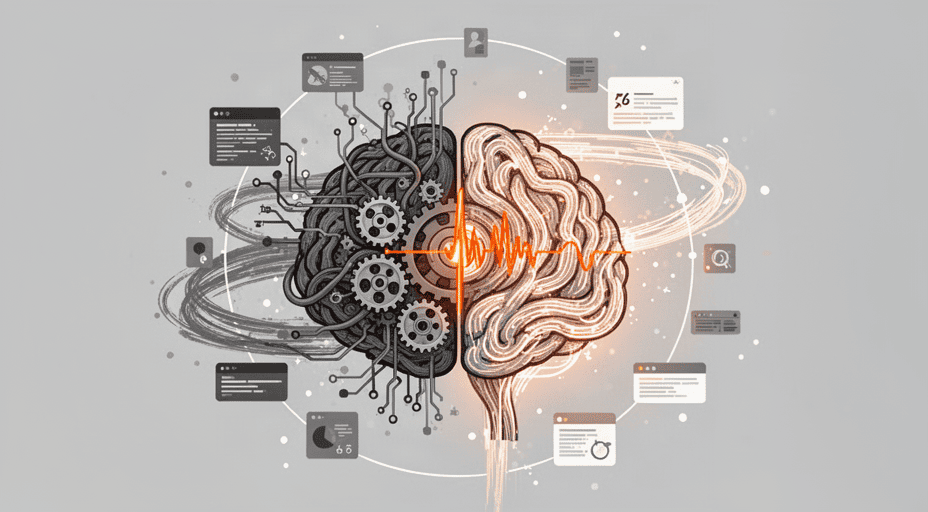
The claim that “AI will replace employees” also misses the actual mechanism. What’s happening isn’t replacement, but functional decomposition. Each role in today’s small business is typically a bottleneck combining 3–4 types of tasks: memory tasks (remembering prices, customer history), classification tasks (sorting emails, routing requests), prediction tasks (estimating inventory, forecasting revenue), and finally, context-based judgment tasks. The first three are gradually separating from humans and consolidating into computer systems at near-zero cost. The fourth remains human, but is amplified by data outputs from the other three systems.
By 2028, small businesses will not resemble automated machines, but hybrid minds with very few redundant mechanical linkages.
Three Axes of Decomposition in Business Structure
To envision the small business of 2028, we must disassemble current operations into their most essential components. Instead of vaguely talking about “AI-automating processes,” we look directly at the three core data flows in any small business: customer information flow (CRM), goods/service fulfillment flow (supply chain and fulfillment), and internal financial flow (payments, cash flow). All the software layers above email marketing, chatbots, accounting are merely interfaces for inputting and outputting data across these three streams.
Customer Information Flow: From Memory to Continuous Recognition
Currently, most small businesses “understand” their customers through the memory of a few long-tenured employees. They recall that customer A prefers certain products or that customer B complained about something three months ago. This is a single point of failure with high risk when staff leave. By 2028, this information stream will transform into a continuous vector data layer. Every interaction an email, a transcribed call, a social media comment is embedded into a mathematical representation in high-dimensional space, enabling the system to not just “search” but “recognize context” without hard-coded rules.
Small language models (SLMs) running internally will automatically extract commitments, deadlines, customer sentiment, and generate updated summaries each morning for business owners. No one needs to read 50 emails at the start of the day or repeatedly ask, “Has this customer paid?” Organizational memory becomes a digital asset independent of personnel and this is the strongest defense a small business can have.
Fulfillment Flow: Optimization Based on Probability, Not Intuition
A typical small business orders inventory based on rough estimates: “We sold about 200 units last month, so let’s order 250 this month to be safe.” This crude linear extrapolation often leads to either excess inventory tying up capital or stockouts losing revenue. By 2028, time-series forecasting tools trained on the business’s own sales data integrated with external signals like search trends, local weather, and cultural events will run automatically every week and recommend order quantities with clear confidence intervals.
This doesn’t require massive data. A forecasting model can start with just 12–18 months of transaction history and a few hundred data points, enough to outperform human subjective judgment in 80% of cases without anomalous disruptions. The real shift isn’t in the algorithm it’s in the mindset: small businesses begin treating transaction data as raw material for decision-making, not just end-of-year reconciliation records.
Financial Flow: Transparency and Instant Reaction
The monthly financial reports of many small businesses in 2025 are still static documents, compiled 10–15 days after the accounting period ends. They tell what happened, not what’s happening. By 2028, AI-integrated accounting tools will function like a financial nervous system: classifying transactions in real time, detecting anomalies (sudden revenue spikes, abnormal operating costs), and issuing cash flow warnings 30–60 days in advance based on upcoming obligations.
This model frees small businesses from “managing by hindsight.” Owners won’t need to wait for accountants or possess deep financial knowledge. The system translates metrics into plain language: “If nothing changes, your account will hit its safety threshold on the 15th of next month. Suggestion: requesting early payments from these three customers will extend your buffer by 22 days.”
Organizational Model: From Pyramid to Expanding Core
When the three data streams above no longer rely on human effort for processing, the small business structure automatically transforms. The traditional model resembles a miniature pyramid: the owner at the top, employees below executing repetitive tasks. By 2028, the dominant model will be the expanding core: a tiny team of 2–4 people focused on strategy, creativity, and partner relationships, surrounded by a layer of specialized AI agents.
These agents aren’t “virtual employees” who can do everything. Each handles one narrow task: one monitors cash flow, another manages appointments and customer follow-ups, another tracks inventory and suggests reordering. They communicate via APIs or intermediate data streams, not simulated human conversations. Humans intervene only at the final judgment level and for exceptions which typically constitute only 10–15% of daily decisions.
This is the key difference from previous automation waves: in the past, small businesses had to change their workflows to fit software. Now, software adapts to the business’s existing data and processes. The former barrier was customization cost; by 2028, that cost drops nearly to zero thanks to the ability to fine-tune language models on internal documents, emails, and unstructured business data.
Atlas Provisions: A 2028-Style Small Business in Action
Specific Context
Atlas Provisions is a supplier of organic ingredients to independent restaurants across three Western U.S. states. In 2026, the company had 7 employees, served 42 regular customers, and generated about $1.8 million in annual revenue. It faced three typical problems: restaurant orders often arrived late at night or on weekends via voicemail or unstructured emails; inventory forecasting relied on the warehouse manager’s intuition; customer service staff spent 60% of their time answering repetitive questions about order status and delivery times.
By early 2028, Atlas Provisions’ operational landscape had fundamentally changed after 18 months of gradual restructuring.
New Operating Mechanism
All customer emails and voicemails are routed to a central system. A small language model, fine-tuned exclusively on Atlas’s historical transaction data and question patterns, automatically extracts order requests into structured fields: item, quantity, requested delivery date, special notes. If information is missing, the system drafts a reply in the tone of the assigned employee not a rigid chatbot and sends it within 30 seconds, even at 10 PM.
The forecasting module uses a time-series model trained on three years of order history, combined with local event calendars (food festivals, restaurant weeks) and farming region weather data. Every Monday morning, the warehouse manager receives a purchase recommendation from farms, along with confidence levels and natural language explanations: “Recommend increasing kale by 15% because two major events are happening in Denver over the next three weeks, based on 2025–2026 patterns. Confidence: 82%.” Intervention occurs only when anomalies arise, such as a farm reporting unexpected crop damage.
The customer service system automatically handles all order status inquiries. Each order has a unique tracking code. When a customer emails, “Where is my order?” the system queries the shipping database and replies with the exact location and estimated arrival time within 20 seconds. The former customer service staff, who once spent 40 hours a week answering repetitive questions, now work only 12 hours a week, using the rest of their time for proactive check-in calls, discovering new needs, and building personal relationships. Customer retention rose from 78% to 92% within 12 months not because of “magical” AI, but because humans finally had time to do human work.
Qualitative Outcomes
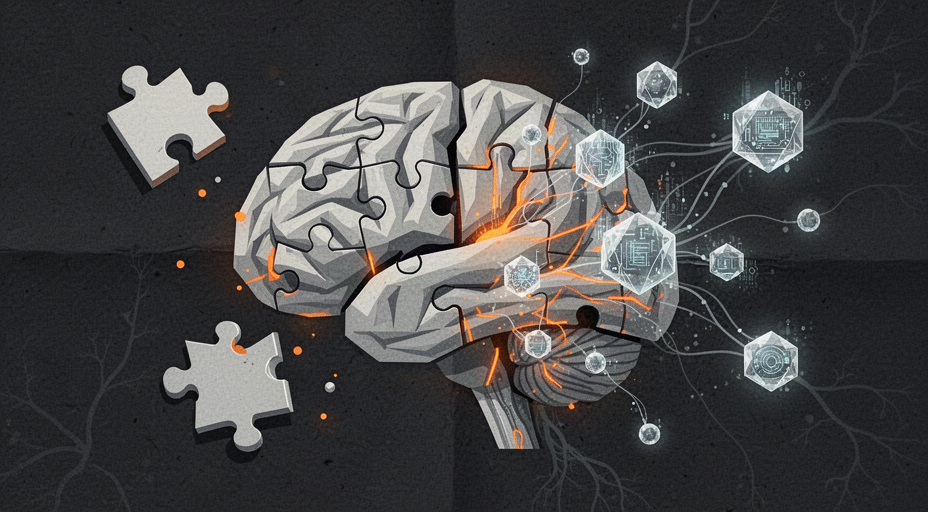
Atlas Provisions didn’t experience explosive revenue growth AI doesn’t create that. But its cost structure and service quality improved significantly. Indirect operating costs decreased by about 35% relative to revenue, primarily due to reduced time on repetitive tasks and less inventory waste. Employees no longer end the day exhausted from handling fragmented workloads. They now have space to notice that their three largest customers are gradually shifting to vegan menus prompting a proposal to develop a new product line. This strategic insight could never have emerged while they were stuck in the email-answering loop.
Comparison Table of AI Solution Categories for Small Businesses
Below are the three main categories of tools small businesses are adopting between 2025–2026, forming the foundation for the 2028 architecture.
| Solution Category | Processing Scope | Strengths | Limitations |
|---|---|---|---|
| AI-Integrated CRM Platforms (e.g., HubSpot AI, Zoho Zia) | Customer information flow | Automatically classify leads, suggest contact timing, integrated with email | Requires initial setup; depends on input data quality |
| Marketing and Conversational Automation Tools (e.g., ManyChat, Landbot, Brevo AI) | Pre-sales customer interaction | Handles repetitive conversations, collects prospect data 24/7 | Can create rigid experiences if scenarios aren’t based on real business data |
| Small-Scale Supply Chain Management Systems (e.g., Toolio, Inventoro) | Fulfillment and inventory flow | Demand forecasting based on sales history; anomaly detection | Requires structured historical data; unsuitable for micro-businesses with under 6 months of data |
| Smart Financial Assistants (e.g., QuickBooks AI, Puzzle, Pilot AI) | Internal financial flow | Automatic classification, early cash flow alerts, natural language reporting | Requires full bank integration and consistent transaction logging |
Key note: no single platform in this table creates breakthrough change on its own. They are building blocks. The real power comes from connecting their data outputs exactly as Atlas Provisions did when the financial system flagged cash flow risks, fulfillment data predicted inventory needs, and CRM identified slow-paying customers converging all into a single dashboard for the business owner.
Readiness Assessment Scorecard
To estimate where a current (2026) small business stands on the path to 2028, use this scoring system based on non-technical factors often overlooked in AI discussions.
| Criterion | Score | Notes |
|---|---|---|
| Level of Core Data Digitization | 7 | Most small businesses use basic accounting and CRM software, but data remains fragmented across platforms |
| Consistency in Data Recording | 4 | Many still mix paper notes, emails, and messages dirty data reduces AI model accuracy |
| Data-Driven Decision Culture | 3 | Most owners rely on personal experience over metrics; cultural shift is the biggest barrier |
| Ability to Afford AI Tools | 8 | AI tools for small businesses cost $20–150/month per tool, generally affordable |
| Skills in Evaluating AI Outputs | 2 | Staff aren’t trained to interpret probabilities or confidence intervals leading to blind trust or outright rejection of AI output |
| Time Available for Process Restructuring | 3 | Owners are often overwhelmed with daily operations, rarely freeing 5–10 hours per week to redesign workflows |
| Total Score | 27/60 | Average of 4.5/10 most small businesses have “necessary conditions, but lack sufficient ones” |
Scoring convention: 1–4 points: Low; 5–8 points: Fair; 9–10 points: Excellent. A total of 27 out of 60 highlights the overall picture: technical infrastructure and cost are not the main bottlenecks. The constraints lie in data quality, leadership mindset, and time allocated to organizational redesign. This explains why two similarly sized businesses using the same tools can have vastly different outcomes by 2028: one treats AI as an app added to a phone; the other treats it as a reason to rewrite their entire operations manual.
Execution Strategy for the Next 24 Months
Transformation isn’t about racing to buy the latest tools. It’s about a disciplined sequence small businesses can start within the next quarter.
Phase 1: Clean Data Foundation (3–6 months)
Before touching any AI, audit all data-generating touchpoints: invoices, customer emails, order messages, warehouse receipts. The only question: what percentage of these are machine-readable? If an employee still manually re-enters data from paper to Excel, that’s the first leak to fix.
During this phase, AI isn’t needed. Simply consolidate all data into a minimally structured format: date, customer ID, product ID, quantity, value. It doesn’t need to be perfect. 80% clean data is enough to train simple forecasting and classification models that already outperform gut-based decisions.
Phase 2: Single-Point Automation (Months 6–18)
Choose one specific bottleneck ideally one consuming the most employee hours but requiring low cognitive complexity: handling order status inquiries, classifying quote requests, checking credit before delivery. Apply a narrow AI tool to that exact task and measure weekly time saved.
This is also when teams begin building reflexes for interpreting AI output. Don’t treat results as absolute truth. Evaluate accuracy through sample checks, missed cases, or misclassifications. This phase trains staff especially owners to work with probabilities, not binary right/wrong answers.
Phase 3: Data Flow Integration and Workforce Reallocation (Months 18–24+)
After two or three bottlenecks are handled by individual agents, begin connecting their outputs. Forecasting data from fulfillment flows directly into cash flow alert dashboards. CRM behavior data automatically updates priority levels for customer follow-up lists.
Simultaneously, the freed-up employee time shouldn’t be used just for rest (though that’s important), but for tasks previously impossible due to time constraints: market research, product experimentation, building strategic supplier relationships. This is when the small business begins to resemble the expanding core model.
None of the technologies in these three phases are speculative. All currently exist and can be deployed for under $500/month for a 7–10 person business.
Forecast: Small Businesses in 2028 Will Break Free From Old Definitions
Two secondary trends will shape the small business landscape in 2028, beyond the three decomposition axes already discussed.
First, the rise of micro-SaaS AI. These are extremely narrow software tools, built by one or two developers, serving a single niche: “AI forecasting ingredient prices for bakeries,” “AI classifying warranty requests for electronics stores.” Small businesses will no longer need to customize large platforms. They’ll buy ready-made solutions tailored to their industry for $30–80/month and plug them in. Deployment barriers will nearly vanish.
Second, the office-less business model will advance further. If 2020–2023 saw a shift to remote work, 2028 will see a shift to fully asynchronous work. AI agents handle night shifts, weekends, and holidays. Humans arrive at 9 AM to find their inbox sorted, forecasts updated, and anomaly reports flagged. The concept of “business hours” will fade from small businesses. Customers sending requests at midnight receive meaningful replies not from a live agent, but from a system deeply familiar with their transaction history.
The takeaway isn’t complicated: small businesses don’t need to become tech companies. They only need to stop treating their data as a byproduct of business activity and start treating it as the business activity itself, expressed in a different form. Those who do this before 2028 won’t compete on price, product, or service alone. They’ll compete on decision speed and the quality of every personal interaction things competitors stuck in manual workflows can’t possibly match.
By 2028, successful small businesses will resemble compact laboratories where humans ask questions and systems respond with data, rather than noisy machines where humans tirelessly chase tasks that machines could have done better long ago.
Related Posts
AI Dependence Is Changing How Small Businesses Make Business Decisions
AI Marketing for SMEs: Why Small Businesses Prioritize This Area

The AI Revolution Is Lowering Software Development Barriers to Nearly Zero, Unleashing an Unprecedented Wave of Indie Hackers
Founders Are Using AI to Scan Reddit for Real Customer Problems Before Writing a Single Line of Code
AI Solves the Staffing Shortage Puzzle: How Small Businesses Can Scale Without Hiring More