What Distinguishes a Skilled Salesperson from a Builder of Sustainable, AI-Powered Sales Systems?
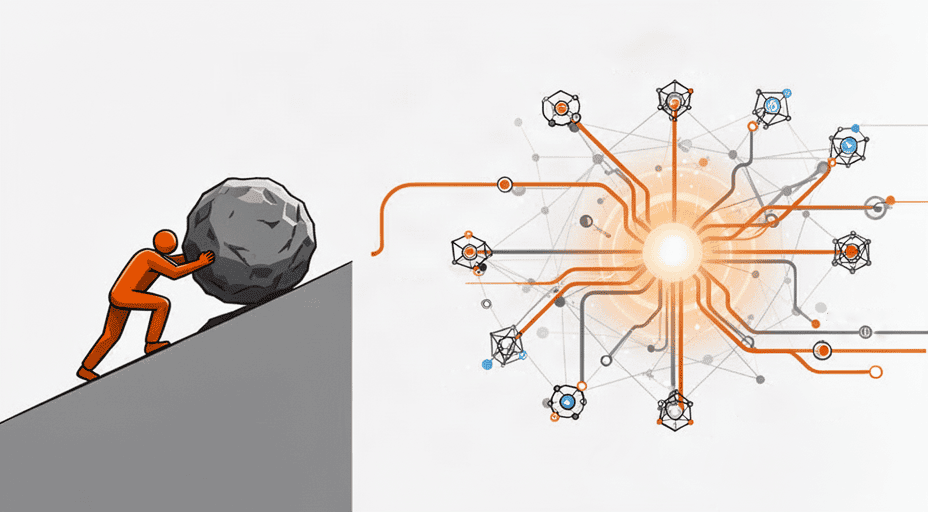
Most debates about AI in sales are stuck on the wrong question: “When will AI completely replace human salespeople?” This is a meaningless question because it assumes that selling is a simple skill and that the best salesperson is merely a more sophisticated version of a chatbot algorithm. The harsh truth is that sales is a continuous loop of information processing and decision-making. The real divide isn’t about whether machines or humans perform better, but whether you’re optimizing a single high-performing individual or architecting a self-replicating, self-correcting sales machine.
In the 2025–2026 landscape, when AI agents can autonomously collect intent signals, personalize content for every micro-moment, and schedule meetings without human intervention, this distinction becomes even clearer. On one side are elite sales artists individuals who cannot be replicated. On the other are sales architects those who design sustainable, automated sales systems. This article unpacks each layer of that divide.
The essence of sales is a data-processing feedback loop
If we temporarily strip away human elements like persuasion, relationships, or emotions, sales fundamentally breaks down into a three-tiered problem:
- Signal collection: Identifying data points indicating a prospect’s potential to become a customer (web browsing behavior, email engagement, third-party intent data).
- Evaluation and scoring (Lead scoring): Comparing these signals against an Ideal Customer Profile (ICP), estimating conversion probability and lifetime value.
- Action decision: Choosing the channel, timing, message, and frequency to maximize conversion rates.
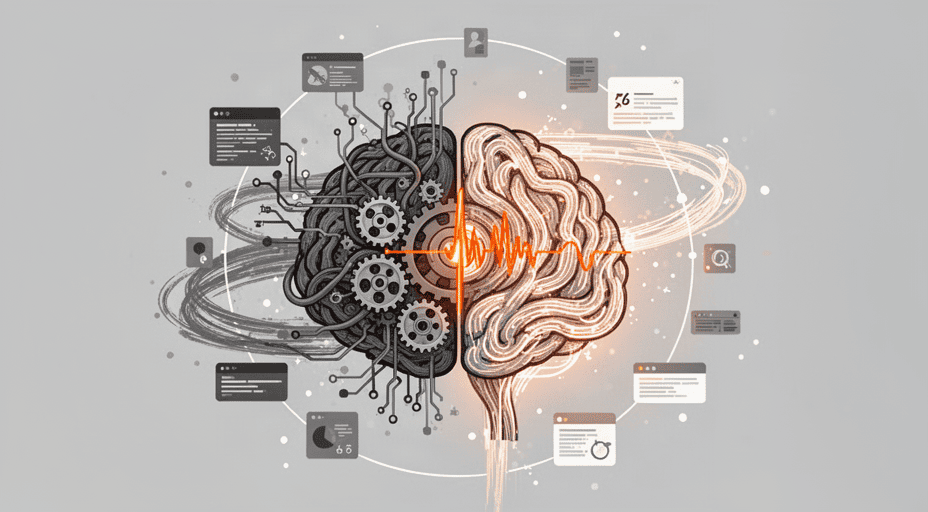
A skilled salesperson performs all three tiers intuitively, relying on experience and memory. They “feel” when a deal is about to close or have a “gut sense” of what the customer needs. This is a sophisticated black-box signal processor but one entirely contained within a single human brain. It cannot be copied, systematically A/B tested, and most importantly, cannot scale linearly without losing quality.
In contrast, a sustainable automated sales system separates these three layers into independent pipelines, each a module that can be monitored, optimized, and replaced independently. The signal collection layer consists of data streams from CRM, websites, and social media. The evaluation layer is a machine learning model that continuously updates lead scores. The decision layer is an orchestration layer that coordinates AI agents to take action.
When a top salesperson becomes a bottleneck
Imagine you have a salesperson named Mark. He hits 130% of his quota every single month. Mark can read customers’ voices, react to objections in milliseconds, and writes follow-up emails so perfectly timed that customers thank him for reminding them to buy. You love Mark, and your business depends on him.
But that’s exactly when Mark becomes an architectural bottleneck.
When you expand into new markets, you can’t hire five more people like Mark. His skills aren’t codified into explicit rules, and there’s no training dataset to build Mark 2.0. Every time Mark takes vacation, his pipeline freezes. Worse, if he leaves, all that expertise vanishes.
This is a fundamental difference: A skilled salesperson generates revenue through non-codifiable personal ability. A builder of automated sales systems generates revenue through intellectual assets in the form of data and logical rules, completely decoupled from any individual.
Key Takeaway: The dividing line isn’t who generates more revenue, but whether that revenue comes from an irreplaceable individual or from a machine that can be backed up, restored, and continuously improved.
Breaking down an automated sales system into its primitive components
To build a system instead of just being good at selling, examine the core components that make up a revenue engine. Every buyer journey can be digitized through these four modules:
Digital Intent Signals
Purchase signals are no longer just direct statements like “I want to buy.” They are behaviors: downloading a whitepaper, time spent on a pricing page, frequency of accessing technical documents, or even comparing products on a competitor’s platform. An automated system must continuously ingest these signals from multiple sources, label them, and update in real time.
Decision Engine
Instead of a salesperson knocking on a door when things “seem promising,” a system uses a rule engine or machine learning model to calculate an action score for each lead. If the score exceeds a threshold, the system triggers the appropriate agent: sending a dynamically personalized email, scheduling a direct meeting, or enrolling the lead into a long-term nurture track.
Execution AI Agents
These are not simple auto-reply bots. 2025–2026 AI agents can maintain cross-channel context, detect shifts in customer sentiment from email tone, suggest meeting times based on mutual availability, and even draft preliminary proposals using pre-approved pricing templates. They operate like junior sales reps, but with perfect patience and precision.
Measurement & Learning Loop
Every action taken by an agent leaves a data trace: Did they open the email? Click the link? Attend the meeting? All data flows into a data warehouse to retrain the signal evaluation model. This closed-loop system grows smarter every day without requiring manual “lessons learned” sessions.
Expert note: The biggest mistake is thinking that attaching a ChatGPT chatbot to your website equals an automated sales system. That’s just a single touchpoint. A sustainable architecture requires the entire pipeline above to work in concert.
Simulated case study: OmniStack Solutions – From sales star dependency to consistent growth engine
OmniStack Solutions provides supply chain management platforms for mid-sized manufacturing companies. Their sales team of eight is led by Clara, a legendary deal hunter with a personal win rate of 38% nearly double the industry average. But when OmniStack tried to expand into the European market, problems arose.
First, hiring local salespeople in Germany was difficult, and even when they succeeded, there was no Clara to mentor them. Second, all outreach campaigns to factories in Düsseldorf used the same messaging crafted for the U.S. market, ignoring key signals like Hannover Messe trade show participation or Industrie 4.0 standards. The result: after three quarters of expansion, sales costs rose 60%, while the new pipeline filled only 20% of its target.
This was the moment they shifted from a “sales star team” model to a self-operating system architecture.
First, they built an Intent Data Hub, integrating data from LinkedIn Sales Navigator, trade show registrations, and technical articles from industry journals. Each signal was weighted, creating a dynamic lead score.
Next, their AI engineering team developed an orchestration layer powered by autonomous agents. When a German production manager downloaded the case study “Reduce 15% Inventory Waste” from their website, the system didn’t just send an automated thank-you email. It checked whether the prospect had attended any webinars, cross-referenced recent job postings at their company (a sign of production expansion), and triggered an AI agent to send a personalized German email inviting them to a private consultation with an Industrie 4.0 expert something that previously required Clara to spend half a day researching.
The system automatically scheduled meetings using timezone and calendar integration via API. Clara and other senior salespeople were freed from cold lead discovery and qualification. They only joined meetings where the intent-to-buy score exceeded 90/100. The conversion rate from meeting to actual opportunity skyrocketed not because Clara’s skills improved, but because every lead she met had already been warmed to near self-selling levels.
After 12 months, revenue contribution from the new market reached 35% of total revenue, marginal sales cost per European lead dropped by 40%, and most importantly, the CFO no longer feared the “loss of Clara” as a business nightmare. Her expertise wasn’t lost; it had been transformed into logical rules, input data, and agent prompts.
Strategy: Transitioning from sales artist to system architect
If you’re running a strong but fragile sales team, here’s a three-phase roadmap to begin building a sustainable layer beyond individual talent.
Phase 1: Uncover and digitize hidden expertise
Don’t start by buying software. Begin by documenting how your top salesperson makes decisions. Use shadow sessions: observe how they classify leads within 15 seconds, what their first question to a prospect is, and why. Turn all observations into a simple decision tree. Each branch becomes a clear rule, for example: “If the customer mentions competitor X in the first email, tag as ‘competitive’ and immediately send the product Y comparison sheet.”
Phase 2: Build a minimal viable data layer
Identify the 5–7 strongest predictive signals used in the decision tree above. These could be job title, company size, latest funding round, or blog engagement frequency. Ensure these signals are collected automatically and cleaned. You don’t need big data; you need the right data.
Phase 3: Run a parallel pilot with a single-purpose agent
Pick the most time-consuming task with a clear success metric for example, qualifying inbound leads. Build an AI agent dedicated solely to this task, running in parallel with human sales reps. Use AI to classify leads into three tiers (hot, warm, cold), then have humans verify during the first week. Compare accuracy. When the agent achieves >90% alignment with expert classification, let it automatically route cold leads into the nurture track without human review.
Execution strategy: “Unpack the black box, don’t try to clone it.” Instead of obsessing over building a “Mark 2.0,” break down Mark’s capabilities into small modules and automate each piece. Sustainability comes from modularity, not technological breakthroughs.
Comparison table: Three sales operation models
To clarify the divide, compare three current sales system designs side by side.
| Criteria | Elite Manual Salesperson | AI-Assisted (Co-pilot) | Sustainable Automated System (Agentic) |
|---|---|---|---|
| Decision mechanism | Personal intuition and experience | AI suggestions, humans decide | Machine learning models make autonomous decisions within defined boundaries |
| Scalability | Limited, linear with sales headcount | Scalable but humans remain the final bottleneck | Non-linear scalability, independent of team size |
| Marginal cost per qualified lead | Increases over time | Slightly reduced due to improved individual efficiency | Sharply reduced, approaching zero |
| Message consistency | Inconsistent | Improved via templates but still user-dependent | Fully consistent, controlled by rules |
| Adaptability to market data changes | Depends on individual learning speed | Learns from feedback but interrupted by subjective bias | Automatically retrained via closed-loop, near real-time |
| Risk of losing key personnel | Very high | Still high, as knowledge resides with decision-makers | Very low, as knowledge is encoded in the system |
This table isn’t meant to diminish skilled salespeople. It clarifies that their value remains constrained if it stays locked within individuals. The Agentic model is the destination for sustainable architecture, where revenue is generated like a production line, not in unpredictable waves from superhero individuals.
Readiness scorecard for building an automated system
Before investing, assess your business across five foundational criteria that every agentic system requires.
| Criteria | Score (1–10) | Notes |
|---|---|---|
| Sales process standardization | 8 | Clear stages in CRM, sales team compliance, but some personal variations remain. |
| Customer data quality | 6 | Data exists but is not clean, missing intent fields, many duplicate contacts. |
| Availability of digital signals | 7 | High website traffic, document downloads from blog, but no integration with trade show or social media data. |
| Internal technical capability | 4 | No dedicated data engineer, reliant on external partners. |
| Product complexity | 5 | Product requires a demo to show full value, not a self-service online purchase. |
Total score: 30/50
Explanation: On a 10-point scale, scores below 25 indicate the business is not ready and should start with basic process digitization. Scores between 25–40 (like the example above) represent the ideal zone for parallel pilots: build an agent for a small part of the pipeline (e.g., inbound lead qualification) while maintaining the current sales team. Avoid heavy investment in a full automated system when internal technical capability is weak (4 points), as third-party dependency risks breaking the learning loop. Scores above 40: ready to build an end-to-end agentic system.
Key lesson: The lowest score in this scorecard internal technical capability (4) is the ultimate barrier. You can’t outsource the thinking behind your sales system. A system architect must be embedded in the organization; otherwise, you’re just buying another app.
When AI agents become colleagues, not tools
A final definition to draw the boundary clearly: For the skilled salesperson, AI is a tool something that helps them send emails faster or pull data. For the system builder, AI is an always-on colleague. They design a clear job description for this colleague, define performance KPIs (agent KPIs), and implement mechanisms to retire underperforming agents.
A system architect spends time on questions like: “Is the agent’s positive response rate increasing week over week?” “How many leads did the agent misclassify, requiring manual recovery?” “How did the latest intent-detection prompt update affect scoring?” This is system performance management thinking entirely different from “How do I close this deal?”
In the agentic era, the boundary is no longer between humans and machines, but between two levels of awareness: one operating within an instinctive black box, the other building a factory from interchangeable Lego blocks. The skilled salesperson still creates magical moments that require empathy and creativity. But the system builder ensures that such moments are no longer a prerequisite for consistent revenue every Monday morning.
Sustainability lies in restructuring how we define “sales.” Not as someone picking up a phone, but as a combination of data, logic, and self-operating actions. The fate of small to mid-sized businesses in 2025–2026 will be determined by whether they choose to nurture lone artists or invest in a revenue production factory. Neither choice is wrong, but only one path leads to survival when markets shift and talent keeps moving on.
Related Posts
AI Dependence Is Changing How Small Businesses Make Business Decisions
AI Marketing for SMEs: Why Small Businesses Prioritize This Area

The AI Revolution Is Lowering Software Development Barriers to Nearly Zero, Unleashing an Unprecedented Wave of Indie Hackers
Founders Are Using AI to Scan Reddit for Real Customer Problems Before Writing a Single Line of Code
AI Solves the Staffing Shortage Puzzle: How Small Businesses Can Scale Without Hiring More